Sunday, 3 April 2016

MALAYS MUST RECLAIM THEIR MALAYNESS AND THEIR MALAY CULTURE FROM BEING ARABISED.

READ HERE IN THE ANTDAILY.COM


The Arabisation of the Malays, which promotes divisiveness and intolerance, has not gone unnoticed. That is why the "titah" of the Sultan of Johore, was a welcome speech for Malaysians, especially the silent Malay majority. 
Clearly worried by the erosion of Malay culture, the Sultan warned Malays not to abandon their own traditions and culture, in exchange for Arabisation.
The Sultan was annoyed that the traditional Malay "Hari Raya Puasa" greeting had been cast aside and the Arabic "Eid al-Fitr", used instead. He said that Malays no longer "buka puasa" but performed "iftar", to break the fast, during Ramadan. 
The Johore ruler criticised the Public Works Department (PWD) for preaching religion, instead of focusing on their responsibilities of repairing roads and other civil engineering duties. He was commenting on the Batu Pahat PWD notice, warning women to cover their hair, lest they be punished in the after- life.
Conscious of the importance of reaching out to all his citizens, as a Sultan, he dismissed as petty jealousy, the criticisms of a band of people who had blown-up the insignificant matter, of the crown prince shaking hands with a woman. 
He urged Malays not to forget their own culture and the practice of "salam", the traditional greeting of the Malays.
He said that he was born a Malay, and is proud to uphold the Malay culture. He suggested that the Malays, who are keen on being mock Arabs, should live in Saudi Arabia.
Few realise that the Arabisation of Malaysia has its roots in a number of sources. 
One of these routes is via Saudi Arabian petro-dollars. Saudi Arabia throws money into charities, mosques and madrassahs, around the world, especially in Southeast Asia. 
Money acts like a drug, and even religious institutions cannot have enough of it. The Saudis wormed their way into government policy, much like the recent RM2.6 billion donation, which was used to influence GE13. Jakim may deny this, but Malaysians know that the Saudis export a strict brand of Islam, which has no place in multi-cultural Malaysia. 
The Dakwah (missionary) movement took off in the late 1970s, in the run-up to the Iranian revolution of 1979. The Dakwahs sought to apply economic and social justice under Islam. They spread by word of mouth, and networks formed via discussion groups, prayer activities and peer pressure.
With the Islamic revival of the 1980s, former PM Dr Mahathir Mohamad knew that PAS was a serious contender for Malay votes. He had to make Umno more religious. Anwar Ibrahim, a charismatic and influential student leader, of the Islamic movement ABIM, caught Mahathir's eye.  
In 1982, Anwar was invited into government, and then he and Mahathir, sought to create a more Islamic Umno to rival PAS. 
The other contributory factor in Arabisation was the return of Malaysian students, sent to the Middle East to study. They started to implement many of the ideas and ways of life, to which they had been exposed in the Middle East.  
Arabisation is an unnecessary scourge on multi-cultural Malaysia. Adopting Arab dress, speech, practices and architecture, divide us further. It is not just Malay against non-Malay, or Muslim against non-Muslim. 
The strict form of Islam which accompanies the Arabisation of Malay culture, pits conservative Malays against secular and liberal Malays, pits conservative Muslims against Sunnis, Muslims of other Islamic sects, and also non-Muslims.  
Today, Muslim women think that wearing a tudung is optional. 
In a few years’ time, Malay women may not be allowed out of the house, unless accompanied by a male relative. Perhaps, Malay women will not be allowed to drive. 
Already, some politicians are suggesting that some people should be whipped in public. How much more Arabisation do we need?
Today, those who are behind the Arabisation of Malaysia, work on your mind. 
In future, Arabisation will lead to further controls on your physical freedom. It happened in Afghanisatan and Pakistan. What makes you think it will not happen here?
 - MARIAM MOKHTAR

1MDB SCANDAL: WHAT THE LUXEMBOURG PROBE WILL UNCOVER

FROM MALAYSIAKINI


Malaysians may be wondering why a tiny European country is joining the growing global investigation into 1MDB, but the outcome of the Luxembourg probe could have great bearing on Prime Minister Najib Abdul Razak.
To begin with, the Luxembourg investigation does not indicate that it has anything to do with Najib.
But the Luxembourg probe is significant as it may solve an important missing link - the connection between 1MDB and a number of entities which have generously pumped billions of ringgit, claimed to be donations, into Najib's personal bank accounts.
ABC News on Tuesday, citing Najib's bank records, revealed that US$1.051 billion (RM4.2 billion) in the prime minister's personal accounts originated from entities such as Saudi Arabia's Ministry of Finance, Prince Faisal bin Turkey bin Bandar Alsaud, Tanore Finance (BVI) and Blackstone Asia Real Estate Partners Ltd (BVI).
The Prime Minister's Office claimed the Saudi entities are proof of what Najib had always asserted - that the money was a Saudi donation and any links to 1MDB is wrong.
So how is this related to the Luxembourg investigation?
The Wall Street Journal today reported that the Luxembourg unit of Banque Privee Edmond De Rothschild Group, which manages funds for wealthy clients, confirmed it was cooperating with the country's investigators who are determining whether 1MDB's funds flowed into the private bank.
However, even before the Luxembourg authorities made public their investigation, Sarawak Report had in January zoomed in on Banque Privee Edmond De Rothschild.
In particular, the whistleblower portal  released documents showing that Khadem Al-Qubaisi's Luxembourg account at Banque Privee Edmond De Rotschilde, held under the name of ‘The Vasco Trust’, received US$472.75 billion (RM1.84 billion) in deposits between May 29, 2012 and Dec 4, 2012.
The money originated from Blackstone Asia Real Estate Partners Ltd (BVI), the same offshore company which had pumped at least US$120 million (RM480 million) into Najib's personal bank accounts between Jan 3, 2012 and May 23, 2012.
Khadem was formerly the chairperson of Aabar Investments PJS, the subsidiary of Abu Dhabi sovereign wealth fund International Petroleum Investment Company (IPIC), of which he was also managing director. Both entities have business dealings with 1MDB.
Five transactions
The Luxembourg probe is believed to be centred around Khadem's account in Banque Privee Edmond De Rotschilde.
This was based on the fact that the Luxembourg state prosecutor's statement said investigators "aim to trace the origin of four transfers in 2012" which corroborates with the four transactions first highlighted by Sarawak Report in January.
The four transactions Khadem received from Blackstone Asia Real Estate Partners Limited (BVI) over a seven-month period began with a US$158 million deposit on May 29, 2012 and subsequently another US$100.75 million, US$129 million and US$85 million were transferred on Aug 3, Oct 31 and Dec 4 respectively, totalling US$472.75 million.
The Luxembourg state prosecutor's statement added that investigators were also tracing the origin of another transaction in 2013, which appeared to refer to a US$20.75 million deposit Khadem received on Feb 2 that year from Good Star Limited, also highlighted by the whistleblower portal in January.
Good Star Limited was controlled by Najib's associate and Penang-born billionaire Jho Low. The company was accused of siphoning off US$1.030 billion from 1MDB's joint-venture with PetroSaudi International, but 1MDB had insisted all its funds in the deal was accounted for.
As the Luxembourg investigation will look into whether 1MDB's fund flowed into Khadem's Banque Privee Edmond De Rotschilde account, it would mean establishing the source of Blackstone Asia Real Estate Partners Limited (BVI) and Good Star Limited's funds which were responsible for the five deposits.
Ultimately, determining whether Blackstone Asia Real Estate Partners Limited's (BVI) got the funds it sent to Khadem from 1MDB, or not, will have a bearing on Najib. In other words, it would be a test on Najib's assertion that the multi-billion ringgit deposits he received had always been a donation and is not linked to 1MDB.
And as for Good Star Limited, the facts established by the Luxembourg investigation will also help shed light if 1MDB was truthful that its aborted joint-venture with PetroSaudi International was above board or whether allegations that US$1.030 billion of 1MDB's funds was siphoned by the company held merits.
Sarawak Report in an article today also noted that the Luxembourg state prosecutor's statement said its investigation of the five transactions is in the context of the issuance of two bonds in May and October 2012.
The timeline corresponds with the two bonds of US$1.75 billion each, totalling US$3 billion, which 1MDB had raised to acquire power assets.
These were the same bonds which Goldman Sachs underwrote and charge over US$300 million, or a staggering 10 percent, and which is now under investigation in the US.
The UAE investigation
But the Luxembourg probe, in the context of the bonds, has more to do with yet another investigation on 1MDB taking place in the United Arab Emirates (UAE).
In September last year, The Wall Street Journal reported that US$2.4 billion 1MDB was supposedly to pay to Aabar Investments PJS, the subsidiary of Abu Dhabi's IPIC, never arrived.
The money 1MDB had to pay were the conditions set out in exchange for IPIC guaranteeing the US$3.5 billion bonds the Malaysian sovereign wealth fund it was raising.
Under the deal with IPIC, 1MDB would allow the Abu Dhabi sovereign wealth fund to keep US$1.4 billion of its US$3.5 billion bonds as security deposit.
1MDB would also give IPIC's subsidiary Aabar Investments PJS a 49 percent option to subscribe to the former's power assets subsidiaries, which 1MDB later terminated for around US$1 billion.
But the Abu Dhabi sovereign wealth fund never received the total of US$2.4 billion, so where did the money go?
The Wall Street Journal in December reported that at least US$850 million of this money was paid to Aabar PJS Ltd, registered in the British Virgin Islands (BVI), which carried a similar name to IPIC's subsidiary.
This company, though having a similar name to IPIC's subsidiary Aabar Investments PJS, was not owned by IPIC. Instead, it was incorporated by Khadem and Mohammed Al-Husseiny, who was also the chief executive officer of the "real" Aabar and have since been removed, according to Sarawak Report.
The whistleblower portal speculated that the Aabar PJS Ltd (BVI) may be linked to Blackstone Asia Real Estate Partners Ltd (BVI), in the context of the Luxembourg authorities probing the 1MDB bonds and Khadem's Banque Privee Edmond De Rothschild account.
If the Luxembourg authorities do establish such a link, then the 'donation' saga may prove to be more than just a 'donation' and may well pile pressure on the Malaysian attorney-general to reopen the case.

Wednesday, 30 March 2016

MALAYSIA-THE STATE OF THE NATION IN 2015: A VIEW FROM A SINGAPOREAN DIPLOMAT

CLICK HERE: From  The Straits Times (Singapore) 

Essay  by

BILAHARI KAUSIKAN.
Former Permanent Secretary for Foreign Affairs
Ministry of Foreign Affairs, Singapore
(Currentlty Ambassador-at-Large)

 6 OCTOBER, 2015


Malaysia is undergoing a systemic change that has profound consequences for Singapore.

What do most Singaporeans make of recent events in Malaysia? Bersih. Pesaka. 1MDB. A Deputy Prime Minister sacked. Protests and counter-protests.

Are we so inured to commotions across the Causeway that they seem no more than the faint tolling of distant bells, evoking only bemusement and schadenfreude? Our system works, so shrug and tend our own garden.

If this is the attitude, it is mistaken. We are indeed different. But I believe Malaysia may be on the cusp of a systemic change that could have profound implications for us.

Since 1957, first Malaya then Malaysia, was premised on a political and social compact that had Malay dominance as its cardinal principle. So long as this was not challenged, other races could have their own space. In political terms, this compact was reflected in a system structured around an alliance of race-based political parties with the dominant Malay party – United Malays National Organisation or UMNO – at its centre.

The Chinese were represented by the Malaysian Chinese Association (MCA), later joined by Gerakan; the Indians by the Malaysian Indian Congress (MIC). Two opposition parties, the Democratic Action Party (DAP) and Parti Islam SeMalaysia (PAS), were in principle multiracial, but in practice largely Chinese and Malay and in any case were peripheral.

It was our refusal to accept the system’s cardinal principle that led to Separation from Malaysia in 1965. But it was a system that had its own coherence and until relatively recently, it did not serve Malaysia badly. And despite the complexities of bilateral relations and occasional periods of tension, over the last 50 years, it was a system we learnt to work with, while going our own way.

Pressure Point–Religion

That familiar system is now under immense stress. It is not certain that it can hold together.The pressure point is religion. Arab influences from the Middle East have for several decades steadily eroded the Malay variant of Islam in which adat or traditional practices coexisted with the Quran in a syncretic, tolerant synthesis, replacing it with a more austere and exclusive interpretation of Islam. This is one aspect of a broader process of globalisation which is a sociocultural and not just an economic phenomenon. It has changed the texture of Malaysian society, I think irreversibly.

It is impossible for any country to insulate itself from globalisation. Religion in Singapore is not immune from globalisation’s consequences, and not just in our Muslim community. Evangelical Christianity is one example. But Singapore is organised on the principle of multiracial meritocracy. So long as this is accepted by all races and religions as the foundation of our identity, the most corrosive political effects are mitigated. In the Singapore system, God – every God – and Caesar are separate and so all Gods must perforce co-exist, with the state playing the role of neutral arbiter.

Not so in Malaysia. The cardinal principle of Malay dominance is enshrined in the Constitution, which also places Islam as the first component in the definition of a Malay. This makes the mixture of religion and politics well-nigh inevitable. Umno politicians have been unable to resist the temptation to use religion for electoral advantage. They are responding to the logic of the system as it has evolved.

In 2001, former Prime Minister Mahathir Mohamad made a fundamental political error when he tried to undercut PAS by declaring that Malaysia was already an Islamic state. A constitutional controversy ensued. But the most damaging consequences were political not legal. Tun Dr Mahathir’s incautious declaration gave a sharper political focus to the changes in the interpretation of Islam that were under way and catalysed a competitive dynamic in which those inclined to religious moderation were inevitably outbid and overwhelmed.

The result has been an increasingly pronounced emphasis on religion in UMNO’s political identity and a significant and continuing narrowing of the political and social space for non-Muslims.

Surveys show that Malaysian Malays privilege Islamic credentials over other qualities they look for in their leaders. A Merdeka Centre survey this year revealed that 60 per cent of Malaysian Malays polled identified themselves as Muslims first rather than Malaysians or even Malays. Demography accentuates the political impact of these attitudes. In 1957 the Chinese constituted 45 per cent of Malaya (West Malaysia). In 2010, they constituted only 24.6 per cent of Malaysia including East Malaysia. Malay fertility rates are significantly higher than both Chinese and Indians.

In the 2013 Malaysian General Election, the ruling Barisan Nasional (BN) coalition got only 13 per cent of the Chinese vote. Two days after the election, Utusan Malaysia, an UMNO mouthpiece, pointedly asked “Apa Lagi Cina Mau?” (What more do the Chinese want?)

The question was provocatively phrased, but not entirely unreasonable. Prime Minister Najib Razak tried hard to win back Chinese votes but got almost nothing for his efforts. MCA won only seven seats. Gerakan was wiped out. The DAP won 38 seats, the largest number in the opposition coalition.

A new system in the making?

The Chinese parties in BN had clearly lost the trust of Chinese voters. Can MCA win back Chinese votes? Doubtful. MCA is obviously powerless to stem the narrowing political and social space for non-Muslims; the fecklessness of its leaders exposed by constant scandals and internal bickering.

In 2013, BN lost the popular vote but retained its parliamentary majority because of the 47 seats it won in East Malaysia. Native East Malaysians are not ethnically Malay but are classified as bumiputera. Some in UMNO began to question whether it was really necessary to work with the Chinese at all. The declining numbers of Chinese in the Malaysian population will sooner or later make them electorally irrelevant to Umno and BN had already retained power without their votes.

Nor can the opposition coalition of the DAP, PAS and Anwar Ibrahim’s Parti Keadilan Rakyat – Pakatan Rakyat (PR) – form a new multiracial system. PR was always a motley crew. Although its component parties are in theory multiracial, they have nothing in common except the ambition to displace BN. Only Anwar’s charismatic personality and political skills held them uneasily together.

Anwar is now in jail and PR has fallen apart. PAS has left. Without Anwar, Keadilan’s future is bleak. The DAP is subject to the demo- graphic constraints of a falling Chinese population and is unlikely to make substantial electoral advances beyond its present strength, although it will probably retain what it now holds. PR’s successor – Pakatan Harapan – a coalition of the DAP, Keadilan and a minor breakaway faction from PAS, is a forlorn hope (pun intended).

PAS has purged its moderate leadership and is now led by the ulama. UMNO is increasingly relying on religion to legitimise itself. UMNO and PAS may eventually form some sort of de facto if not de jure alliance that could be the core of a new ruling system. There may be token ornaments of other races, but the Malaysian system will then comprise an overwhelmingly dominant Malay government with a DAP-led Chinese opposition. This will be potentially explosive.

I do not know if such a system will really replace the current system, but it certainly seems possible, even probable. It will not happen overnight. But the controversy over 1Malaysia Development Berhad (1MDB) could well hasten its emergence. The recent demonstrations seem to foreshadow such a development.

Struggle for Power in UMNO

The anti-government Bersih demonstrations held in late August this year (2015) were, despite a sprinkling of other races, predominantly Chinese affairs. PAS, which had joined previous Bersih demonstrations, stayed away. The organisers claimed the demonstrations were apolitical, but the DAP with Keadilan clearly played significant roles.

Last month, a pro-government counter-demonstration was organised by Pesaka – a right-wing Malay group ostensibly devoted to silat, the Malay martial art. The demonstration was almost entirely Malay, positioned as defending Malay rights and marked by fierce racial rhetoric. Before the demonstration, posters were displayed, captioned “Cina turun Bersih, sedialah bermandi darah” (Chinese who attend Bersih, be ready to be bathed in blood) which depicted a Bersih supporter being slashed with a parang. A flier with a similar slogan was found at DAP headquarters.

UMNO denied organising the demonstration. Dato’Seri Najib did not attend but said he had no objections to Umno members doing so. The President of Pesaka is an UMNO leader. Another UMNO politician, who was one of the driving forces of the Pesaka demonstration, proudly admitted he was racist because it was under the Constitution.

Thankfully, violence at these demonstrations was avoided by the strong police presence. But the demonstrations certainly raised the temperature of an already racially fraught atmosphere.

Although the authorities denied it, the affray that broke out in July at Low Yat Plaza, a mainly Chinese shopping area in Kuala Lumpur, after a Malay youth was accused of stealing a mobile phone, was certainly racial. It exposed the tinderbox Malaysia had become.

Shortly after news broke about US$700 million (S$1 billion) believed to be from 1MBD being traced to what was alleged to be Mr Najib’s personal account, a Putrajaya spokesman said: “The Prime Minister has not taken any funds for personal use.”

UMNO has always operated through a system of patronage. If this is what the spokesman was hinting at, then Dr Mahathir’s accusations against Mr Najib ring hollow. Did he not preside over the same system and for far longer than any other Malaysian prime minister?

This system also means that Mr. Najib is in no imminent danger of being forced from office so long as he holds the majority of UMNO divisions and retains Malay support. Frustration may account for Dr Mahathir’s attendance at the Bersih demonstration which I do not think has raised the good doctor’s standing with the Malay ground.

The 1MDB scandal is less about corruption than about a struggle for power within UMNO. Dr Mahathir seems to have expected to exercise remote control even though he was no longer prime minister. Among his grievances with his successors were their warming of ties with Singapore, Mr Najib’s decision to settle the railway land issue, cooperation on Iskandar Malaysia (IM) and the refusal of both Tun Abdullah Badawi and Mr Najib to proceed with his pet white elephant: the “crooked bridge”. Dr Mahathir wants to replace Mr Najib with someone more pliable.

The intra-UMNO power struggle is not over. Mr Najib retains his office but has been politically damaged. Dr Mahathir’s reputation may have been dented, but he still has a following within UMNO and the Malay public.

Mr. Najib cannot allow himself to be outflanked on the right. Two days after the September demonstration, he attended a Pesaka gathering. He praised Pesaka members as being “willing to die” for the government and said “Malay people can also show that we are still able to rise when our dignity is challenged, when our leaders are insulted, criticised, shamed”, adding, “We respect other races. But don’t forget: Malays also have their feelings. Malays also have their limits.”

What next?

A former minister, Tan Sri Zainuddin Maidin, has said that “if Najib succeeds in uniting UMNO and PAS, then I am confident the Malays will forgive his grave mistakes”, adding that “after fulfilling this large and sincere task” he should step down and hand power to former deputy prime minister Muhyiddin Yassin.

I do not know if Mr. Najib feels he has committed “grave mistakes”. But he certainly will not hand over power to a man he unceremoniously sacked. Still, Mr Zainuddin is probably not wrong about anyone who brings UMNO and PAS together becoming a Malay hero. It may not be Mr. Najib, but the trajectory of political developments in Malaysia already seems to point in that direction.

Malaysia and Singapore are each other’s second-largest trading partner. Malaysia is Singapore’s sixth-largest investment destination and we are the top investor in IM. Every day tens of thousands of Malaysians commute across the Causeway to work in Singapore. It is in our interest to see Malaysia stable with a healthy economy.

Mr. Najib understands that Malaysia and Singapore need each other. So far and unusually we have not figured very much in the controversies. Dr Mahathir did trot out his tired line about Singapore Malays being marginalised. But it did not catch fire. Did the government dampen the spark? No way of knowing for sure but if it did, it is one more black mark against Mr Najib in the old man’s book.

We, of course, have no choice but to work with whatever system or leader emerges in Malaysia. But some systems will be easier to work with than others. And the current heightened state of racial tensions suggests that we should not assume that the transition from one system to another will necessarily be peaceful.

It is my impression that many young Malaysian Chinese have forgotten the lessons of May 13, 1969. They naively believe that the system built around the principle of Malay dominance can be changed. That may be why they abandoned MCA for the DAP. They are delusional. Malay dominance will be defended by any means.

Any new system will still be built around this principle, and if it has some form of UMNO-PAS collaboration at its centre, enforcement of this principle will be even more rigorous with even less space for non-Muslims.
The respected Malay poet and writer Pak Samad recently warned “the way race issues are played up… it is not impossible that things will peak into a state of emergency”.

Pak Samad is a member of the DAP and he was appealing to the government to take a more equitable attitude towards all races. But his views and those of some idealistic young urban Malays are exceptional and, during an intra-UMNO power struggle when the banner of Malay dominance is raised particularly high, utterly irrelevant.

Singaporeans should also note that no country’s domestic politics exists in a geopolitical vacuum.

Chinese Ambassador’s Remarks

In the midst of these unfolding developments, China’s Ambassador to Malaysia made his way to Kuala Lumpur’s Chinatown. Close to where only a few days previously the police had to use water cannons to disperse a potentially violent anti-Chinese Pesaka-led demonstration, the ambassador read out a statement that among other things pronounced the Chinese government’s opposition to terrorism, any form of racial discrimination and extremism, adding for good measure that it would be a shame if the peace of Petaling Street was disrupted by the ill-intentioned and that Beijing would not stand idly by if anything threatened the interests of its citizens and Malaysia-China relations.

Under other circumstances these sentiments would perhaps have passed notice. But the timing and context laid the Ambassador’s words and actions open to disquieting interpretations.

Was it just bad judgment? What was he trying to do? If the ambassador was trying to help the Malaysian Chinese, then he failed miserably. He probably made things worse for them by confirming the worst suspicions of the Malay right wing.

But were the interests of Malaysian Chinese even a consideration? Was the intention to highlight a rising China’s clout? The Chinese Foreign Ministry spokesman defended the ambassador’s visit to Petaling Street as “normal” and emphasised China’s adherence to the principle of non-interference. But this was of course what she would have said irrespective of China’s intentions.

More telling perhaps was the apparent confusion over whether or not the Chinese ambassador should be summoned to explain himself. This should have been obvious. A retired Malaysian diplomat who used to deal with China pointed out the dangerous precedent that would be set if no action was taken. But different Malaysian ministers contradicted each other, with a clearly frustrated Foreign Minister Anifah Aman finally telling them all to leave it to Wisma Putra.

Was this the consequence of China’s influence? Possibly. In the end, some sort of meeting with Wisma Putra seems to have occurred. Deputy Prime Minister Ahmad Zahid Hamidi subsequently announced that the Malaysian Cabinet decided to “call in” the Chinese ambassador (he was careful to make clear the ambassador was not being “summoned”).

Lesson for Singapore

We cannot solve other people’s problems. Malaysians must work out their own destiny and we will have to live with their choices.

Are we completely immune to contagion from Malaysia? After 50 years, does our collective Singapore identity now trump racial identities? Maybe under some circumstances. Optimistically, perhaps even most circumstances. But under all circumstances?

I doubt it. Let us wish Malaysia well and hope that the worst does not occur.But it would be prudent to take no chances and prepare ourselves as if it might. The first step is for all Singaporeans to understand what is happening in our neighbourhood and realistically appreciate our own circumstances.

Deterrence and diplomacy are necessary to reduce the temptation that some in Malaysia may have to externalise their problems and minimise the bilateral friction that will sometimes be unavoidable. Strong deterrence and agile diplomacy must be underpinned by national cohesion which in turn rests on a foundation of common understandings.

Of late it seems to have become fashionable for some sections of our intelligentsia to downplay or even dismiss our vulnerabilities. Some political parties tried variants of this line during our recent General Election. Are they blind and deaf to what is happening around us? Is their desire for notoriety or political advantage so overwhelming as to make them indifferent to the consequences?

Malaysia is not the only concern. The haze is a daily reminder that all is not well down south too. This is not the most salubrious of neighbourhoods.

- BILAHARI KAUSIKAN.

Tuesday, 29 March 2016

Sorry Folks, Here’s Why Lim Guan Eng & Khir Toyo’s Bungalow Scandals Aren’t Similar


FROM "FINANCE-TWITTER" Blog

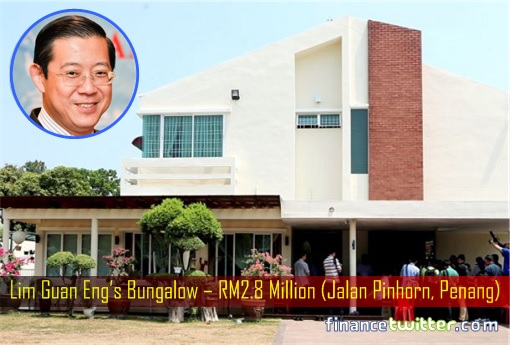
Lim Guan Eng (LGE), if he’s a kopitiam boss or a roast pork seller, would not get the attention (and trouble) he’s getting now. In fact, nobody would care that he had struck a good deal getting himself a bungalow for RM2.8 million – a crazy discount to market value. At 10,161 square feet, his bungalow in Jalan Pinhorn, Penang, was a steal at RM276 per square foot.

Unfortunately, Mr. Lim is no ordinary Chinese Ah Pek but the Penang Chief Minister. The worse part – he’s the leader of an opposition party DAP (Democratic Action Party) who commands 90% of Chinese votes. Therefore, whenever he buys or sells something, the price must be “ngam-ngam (precise)”. He can neither buy a bungalow below nor above market price.
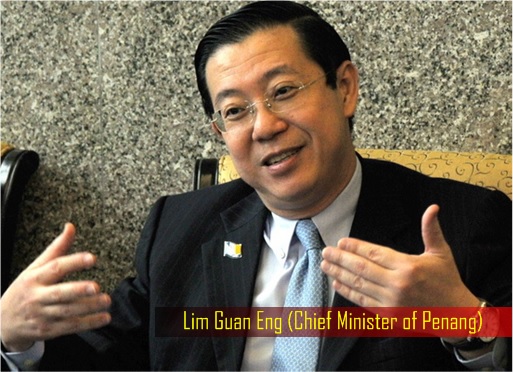
Lim Guan Eng - Penang Chief Minister
If he buys a real estate “below” market price, then he is being rewarded for helping the seller on certain project. If he buys a property “above” market price, then he is cleaning dirty money through money laundering. That’s how the perception game is being played. Heads Guan Eng loses, tails Guan Eng also loses. This is madness, is it not?

In other words, Lim Guan Eng can never own a bungalow worth millions. Unless he switches sides to UMNO, he can only rent a bungalow or buy a condominium within his financial means. That’s because condominium should roughly fetch the same price within the same block, unless heavily renovated, unlike a bungalow sitting on a 10,161 square feet plot of land.
Lim Guan Eng Bungalow – RM2.8 Million (Jalan Pinhorn, Penang)
In the same breath, Mr. Lim would get himself into trouble too if he plans to buy some properties through “lelong (auction)”, a normal process conducted by banks to get rid of real estates seized from past owners who couldn’t pay their scheduled mortgage loan. Again, he must ensure the price he bids for lelong properties must be “ngam-ngam” (*grin*).

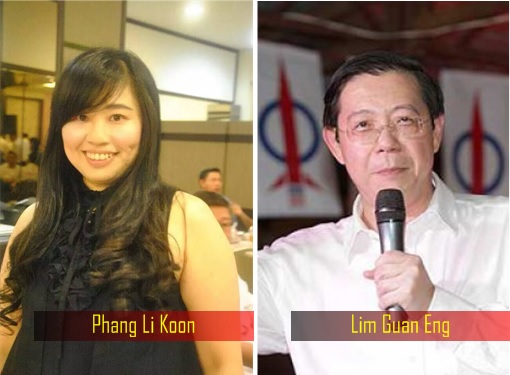
Apparently, the seller of the bungalow, Miss Phang Li Koon, has signed a SD (Statutory Declaration) to relieve pressure on Lim Guan Eng. It seems the seller was a great admirer and supporter of Mr. Lim. She was also a close friend of the Chief Minister’s wife, Betty Chew. So, it was a “goodwill sale”after the Lim family rented the bungalow since 2009 at RM5,000 per month.
Penang Bungalow Scandal - Lim Guan Eng and Phang Li Koon
There’re 1,001 reasons why Guan Eng could buy the controversial bungalow for RM2.8 million, well below market price, if he was an ordinary folk. The bungalow could be haunted. Miss Phang has a crush on him. Betty Chew was a world class haggler she often gets free McDonald’s meal. Miss Phang was so touch because Guan Eng has taken care of the bungalow – polishing and waxing toilets daily.

The Penang Chief Minister claimed that he had bought his bungalow on a“willing buyer-willing-seller” basis. After all, it was a 30-year-old bungalow with “no” swimming pool (*grin*). He took a bank loan of RM2.1 million and paid the remaining RM700,000 in cash based on his income as the chief minister and an elected representative.
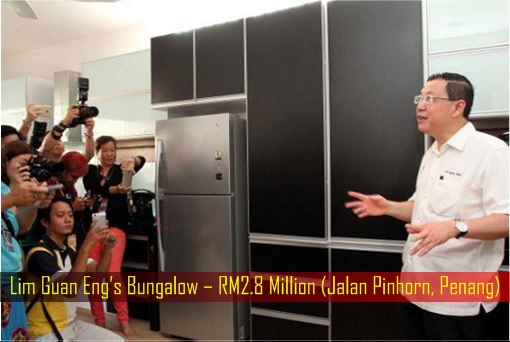
Lim Guan Eng Bungalow – RM2.8 Million (Jalan Pinhorn, Penang) - Interior
But that was exactly what had happened to former Selangor Chief Minister Khir Toyo, screamed UMNO politicians and bloggers. Mr. Khir had used “willing buyer-willing-seller” argument to justify his purchase of two plots of land and a bungalow in Shah Alam below market price. Still, he had failed to convince judges and was sentenced for 12 months behind bars.

Using Khir Toyo’s case as a yardstick, Lim Guan Eng should therefore go to prison too. Actually Khir could be saved by UMNO and need not go to jail. However, he was one of Mahathir’s boys so when Badawi and Najib took over, he was flushed out of favour. And when he lost the Selangor state in the 2008 national election, he was of no use to UMNO.
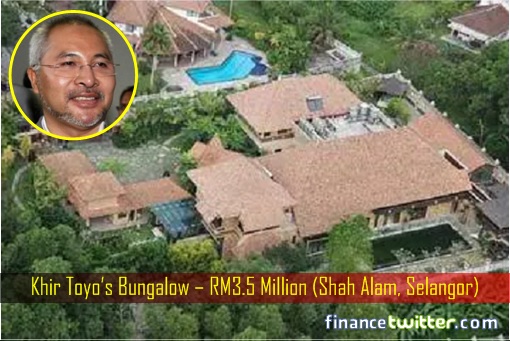
Khir Toyo’s Bungalow – RM3.5 Million (Shah Alam, Selangor)
That was why Khir was officially charged in 2010. That was why out of hundreds of UMNO leaders who purchased bungalow below market price or even given free by businessmen, only Khir was charged. That was why UMNO didn’t instruct judges to close one eye on Khir’s case, as they normally would. But how different was Khir Toyo’s bungalow scandal to Lim Guan Eng’s?

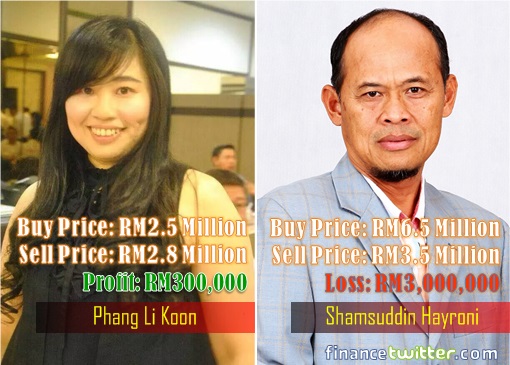
  1. Ditamas Sdn Bhd director, Shamsuddin Hayroni, bought his bungalow at RM5 million, excluding renovation cost of RM1.5 million, but sold the renovated property to Khir Toyo at lower price of RM3.5 million. On the other hand, Miss Phang Li Koon bought her bungalow in 2008 for RM2.5 million and sold it to Guan Eng for RM2.8 million. Shamsuddin sold it for a 46% loss while Miss Phang sold it for a 12% profit.
  2. Shamsuddin admitted that he had sold his two plots of land and a bungalow at a price of RM3.5 million to Khir Toyo for fear of jeopardizing his housing projects in Selangor. Miss Phang signed a SD and admitted she sold her property out of fear of Barisan Nasional’s constant demonstration, harassment and stress instead.
  3. Shamsuddin admitted he personally did not agree with the RM3.5 million price wanted by Khir Toyo and told him the property should be at least between RM5 million to RM5.5 million. On the other hand, Miss Phang was honoured and happy to sell her bungalow to Lim Guan Eng and his family for RM2.8 million, due to respect.
  4. By their own admissions, Shamsuddin had a business relationship with Khir through PKNS. On the other side, Miss Phang (through her SD) and Mr. Lim announced they have no business relationship whatsoever.
  5. In his capacity as PKNS Chairman, Khir Toyo had admitted to giving aletter of support to Ditamas Sdn Bhd director, Shamsuddin Hayroni, who bids for PKNS projects. In her SD, Miss Phang denied the allegations of being a director or shareholder of KLIDC company which has successfully bid for the Taman Manggis land. Additionally, Taman Manggis land was sold for RM11 million through “open tender”, not to mention Mr. Lim wasn’t part of the tender committee.
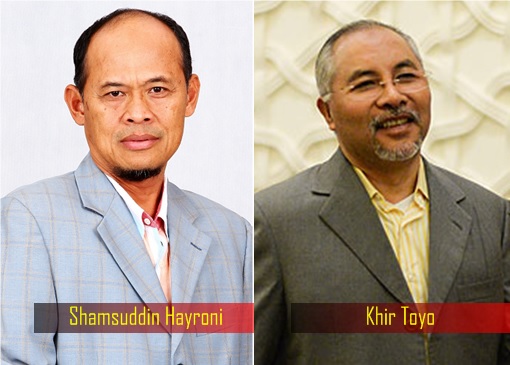
Shah Alam Bungalow Scandal - Khir Toyo and Shamsuddin Hayroni
It would be extremely stupid for Lim Guan Eng, an accountant, to get himself into corruption in the purchase of the bungalow, knowing very well Malaysian Anti-Corruption Commission (MACC) and the rest of the government agencies are eyeing his every single move. There’s simply no case against him because he had taken all the necessary precautions to prevent from being trapped or implicated.

Khir Toyo was found guilty primarily because what the courts did not look kindly upon was the fact that the said property was bought (by Khir) at a lower price, compared with the much higher price when the property was purchased by (seller) Shamsuddin Hayroni. So the keyword here is purchase price andselling price, NOT market price.
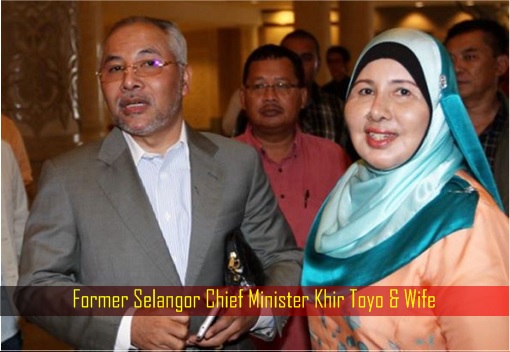
Former Selangor Chief Minister Khir Toyo and Wife
Shamsuddin’s selling price to Mr. Khir was “lower” than his purchase price. Miss Phang’s selling price to Mr. Lim was “higher” than her purchase price. Both Shamsuddin and Miss Phang sold their properties below market price though. In short, Shamsuddin made a terrible 46% loss while Miss Phang made a not so handsome 12% profit.

But as long as Miss Phang didn’t make any losses selling her bungalow, judges may find it hard to compare Guan Eng’s case to Khir Toyo’s. She had made a cool RM300,000 or 12% profit on his investment of RM2.5 million on the property. And based on her SD, it was clear there were elements of goodwill, respect and gratitude due to Guan Eng’s administration of Penang.
Phang Li Koon and Shamsuddin Hayroni - Profit and Loss Comparison
There’s no law that says one cannot sell real estates at below “market price”, as long as one doesn’t sell it at a loss – below “purchase price” – without a compelling reason. There’s little doubt that “willing buyer-willing-seller” applies in Lim Guan Eng’s bungalow transaction but not Khir Toyo’s. Perhaps UMNO doesn’t understand how Chinese do business.

As far as Miss Phang is concerned, the sale was still a good deal because she didn’t lose money. She just made less profit. Not all business deals must be done with maximum profit. That’s why IT Mall, Low Yat Plaza, is doing a roaring and long-term business despite making lesser profit margin than UMNO-sponsored MARA Digital Mall.
Malaysian IGP Khali Abu Bakar - Lim Guan Eng and Phang Li Koon - Bungalow Scandal
What Najib administration has, however, is the indirect link between Lim Guan Eng and Miss Phang Li Koon. And you can bet your last penny that UMNO will use its usual tactics – threat, intimidate, harass, bribe – on the Chinese woman until she changes her SD, the same way private investigator Balasubramanim and his wife did on the Altantuya murder scandal.