Wednesday, 8 January 2014

KNOW THE 16 RIGHTS IF YOU ARE BEING CONFRONTED BY THE POLICE

1. If a plain-clothed police stops you, you may politely ask to see his Police Authority Card. A red card indicates a suspended police officer, he has no authority over you.

Last updated by meimeichu 1 day ago
  • If the police is not in uniform, ask for identification, say: “Please, show me your Police authority card“. Note his name and Police authority card number.
    • Big thumb d234
  • Police authority card - Red : Suspended Police Officer. He has no authority to do anything to you. Walk away. Other colours: • Blue : Rank of Inspector and above • Yellow : Below the rank of Inspector • White : Reserve police

2. If a uniformed police stops you, note his name, uniform ID number, and the number plate of his patrol vehicle

Last updated by meimeichu 1 day ago
    • Big thumb 04fd

3. You are only obliged to provide your name, IC number and address if a policeman stops you. If he asks other questions, politely reply with "Am I under arrest?"

Last updated by meimeichu 1 day ago
  • You are arrested if the Police: • tell you "yes"; • do not allow you to leave/want to take you to the Police Station; or • handcuff you.
  • The Police cannot arrest you just because you are a potential witness and they want to take a statement from you (Witness/112 Statement).

4. If you are NOT under arrest, you may refuse to follow the police to the police station or anywhere else

Last updated by meimeichu 1 day ago
    • Big thumb 8742
  • If you are not under arrest, you may walk away/refuse to follow him back to the Police Station or anywhere else, if asked.
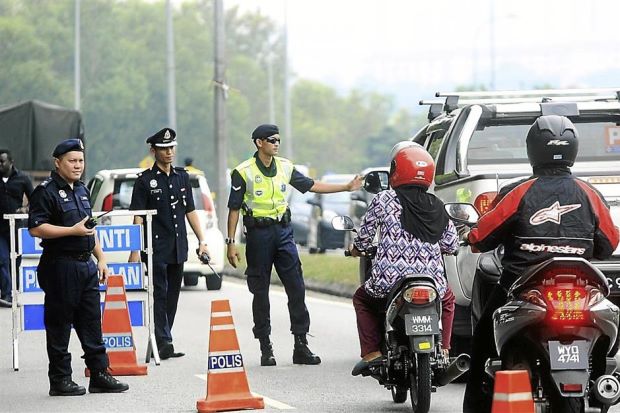
5. You have the right to a lawyer to accompany you when you are questioned by the police without arrest

Last updated by meimeichu 1 day ago
  • When the Police are investigating a case and think you have information / knowledge about the case, the Police may question you and take down your answers (112 Statement).
  • You have the right to ask a lawyer to accompany you. This is advisable. In giving a 112 Statement, you may refuse to answer any question / remain silent if the answer is likely to expose you to a criminal offence. Before signing your Statement, read the questions and your answers written by the Police Officer carefully.
  • If you refuse to cooperate, the Police may issue a formal order in writing, signed by an investigating officer (Police Officer) to ask you to cooperate. If you disobey a Police Order, you cannot be arrested. However, it is an offence and the Police may request the Magistrate to issue a warrant against you to compel you to cooperate.

6. If the police arrest you, do not resist. Ask 'Why am I under arrest' and "Which police station are you taking me to". You have the right to call a friend or a lawyer.

Last updated by meimeichu 1 day ago
  • Ask: "Why am I under arrest?". An arrest is unlawful if you are not informed of the reason. Do not resist an arrest The Police have the right to use reasonable force to arrest you if you resist.
  • Ask: "Which Police Station are you taking me to?". The arresting Police Officer must immediately take you to the nearest Police Station and no other place.
  • What to do when arrested: You have the right to telephone: 1. Your relative or friend; and 2. A lawyer. You may also call a nearby Legal Aid Centre (LAC).
  • What happens after arrest: You may be detained up to 24 hours: • at the Police Station, or • in a lock-up to "assist" police investigation.
    • Big thumb 6144

7. If you are detained, you have the right to meet and consult a lawyer. You are allowed to have a set of clothing, two baths a day, and your personal belongings must be returned to you upon release.

Last updated by meimeichu 1 day ago
  • Once you request for the presence of a lawyer, you have a right to consult the lawyer at the Police Station. The Police must accord you reasonable facilities and a reasonable time period for you to meet and consult the lawyer. The Police may, however, deny you this right, if the delay in questioning you may cause the occurrence of another crime or cause danger to others.
  • You are allowed to take a bath two times a day. If you are sick, you have the right to receive immediate medical attention. You are to be given proper and adequate food and water during detention. The Police must record and put all your personal belongings in safe custody. Your personal belongings must be returned to you upon your release. You are allowed to have one set of clothing with you in the lock-up.

8. Police may only detain you for up to 24 hours for investigation. To extend your detention, you must be brought before a Magistrate for a remand order.

Last updated by meimeichu 1 day ago
  • he Police may only detain you for up to 24 hours for investigation. The duty of the Police is to complete investigations within 24 hours and to release you as soon as possible. If the Police cannot complete investigations within 24 hours, they must bring you before a Magistrate for a remand order to extend your detention beyond 24 hours (Remand Order).

9. When you are brought before a Magistrate for remand, you may ask for a shorter remand period by giving good reasons

Last updated by meimeichu 1 day ago
  • Ask for a shorter Remand Order from the Magistrate: Before the Magistrate makes the Remand Order, ask for a shorter period than what the Police asked. Give reasons (examples: "I will co-operate with the Police in their investigation", "I will be available and will not run away" etc).
  • When you are brought before a Magistrate for remand, tell the Magistrate: • you want legal representation and you want to contact your lawyer, • if you want medical treatment because you are sick or have been beaten; • if the Police threatened or beat you during detention; • if you were denied proper and adequate food/water/clothing, access to the toilet or necessary medical attention during your detention; • whether you had been detained previously, immediately before your current detention; • whether the Police carried out any investigations during your detention.
    • Big thumb 432e

10. Police can conduct a body search without arrest if you are found during a police raid and is believed to be hiding something like drugs

Last updated by meimeichu 1 day ago
  • What to do: • Do not allow the Police Officer to put his hands into your clothes or pockets. • If you are asked to take out your belongings one by one, each time, say "purse", "keys", "ID card" etc. • When your pockets/bags are empty, turn them inside out.
  • If you are at a place (example: disco/karaoke/entertainment outlet) where the Police are conducting a raid to look for something there (example: drugs), the Police may detain and search you if they think you have or are hiding the thing being searched for. This may only be done in the presence of a Police Officer ranked Inspector and above.
    • Big thumb 4e14

11. A female can only be searched by a female police officer. Protest and lodge a police report if you are forced to strip naked or threatened with a strip search.

Last updated by meimeichu 1 day ago
  • All body searches must be carried out in a professional manner and with decency. • A female can only be body searched by a female Police Officer. • If you are forced to strip naked or threatened with a strip search: 1. Protest; 2. Remember the Police Officer's name; and 3. Lodge a police report after the incident.

12. If police conduct a body search after arresting you, it must be done in a professional manner and in private. You may request to be accompanied by your lawyer.

Last updated by meimeichu 1 day ago
  • All body searches must be carried out in a professional manner and with decency. The body search must be conducted in a confined place. It is your right to be bodily searched in private. It is advisable to request that you be accompanied by your lawyer for the search.
  • The law allows the Police to conduct 4 types of body search:- pat down search, strip search, intimate search, and intrusive search. A female can only be body searched by a female Police Officer.

13. If you are questioned by the police during your arrest, you have the right to remain silent. Be polite when saying "I would like to exercise my right to silence".

Last updated by meimeichu 1 day ago
    • Big thumb eb69
  • Identity of the Police Officer questioning you: Note the name/rank of the Police Officer questioning you.
  • The Police Officer will first make friendly conversation/talk (example: ask you about your family and friends etc). You are only obliged to give your full name, age, address and occupation (Personal Particulars). Other than giving your Personal Particulars, you have the right to remain silent. Be polite. Do not be afraid to remain silent. This is your right. If you choose to remain silent, say: "I would like to exercise my right to silence".

14. Police cannot threaten or force you into making a statement. Lodge a police report if you have been threatened, beaten or forced.

Last updated by meimeichu 1 day ago
  • The Police Officer will ask you questions and then write down your answers. The Police cannot threaten or force you into making a Statement. If you have been threatened, beaten or forced, lodge a police report against the Police Officer at the first opportunity. This is your right.

15. Any statement you make during investigations cannot be used as evidence unless you are being charged for offences. You may use the statement to support your defence during trial.

Last updated by meimeichu 1 day ago
  • Generally, any Statement you make to the Police during investigations cannot be used as evidence except if you are being charged for offences under, for example, the Dangerous Drugs Act, the Kidnapping Act and the Internal Security Act. However, you may use the Statement to support your defence during your trial.

16. You are advised to call a nearby Legal Aid Centre (LAC) if you are arrested. These are their contact numbers:

Last updated by meimeichu 1 day ago
  • You may also call a nearby Legal Aid Centre (LAC). Inform them: • you have been arrested; • the time, place and reason of the arrest; • the Police Station you will be taken to.
  • • Kuala Lumpur : 03-2691 3005 / 03-2693 2072 • Selangor : 03-5510 7007 / 03-3281 2428 • Negeri Sembilan : 06-6013 844 • Melaka : 06-2845 519 / 06-2864 514 • Johor : 07-2235 698 • Perak : 05-2550 523 • Kedah & Perlis : 04-7333 467 • Kelantan : 04-7448 660 • Pahang : 09-5159 244 / 09-2969 410 • Pulau Pinang : 04-2617 451/ 04-3108 451
  • Legal Aid Centre’s objective is to enlighten the public and the impecunious in particular as to the legal aspects and to educate them about the various fundamental and legal rights and liberties that they are entitled to.
    • Big thumb 7b8d

The Red Book, Created By A Group Of Lawyers Known As TANGKAP, Is A Pamphlet To Help Malaysians Know Their Basic Rights. Download The Full Pamphlet Here:

Last updated by meimeichu 1 day ago
  • CLICK ON LINK to download the Red Book in English or Malay.
  • “The purpose of the Red Book is aimed at disseminating valuable information so that the public would know their basic rights when faced with the Police. An individual who is aware of his rights and is prepared to exert them will in all likelihood receive better treatment by a detaining authority than an individual who is ignorant and prepared to accept any form of treatment meted out,” said Nazri Aziz.
    • Big thumb 171a
  • “TANGKAP have initiated this effort of creating awareness and to provide an easy step by step guideline which would be most beneficial in ensuring that everyone has legal access and to ensure his/her rights are protected. It is not a code against the police, but more of informative codes to ensure personal freedom and dignity,” stressed Nazri.

Monday, 25 November 2013

Selangor Sultan has NO POWER to Prevent Non Muslims from Using the Word "ALLAH"


http://tinyurl.com/krty5nr

Selangor residents are NOT legally bound by the Sultan’s latest decree banning non-Muslims from using “Allah” in the state as the ruler’s powers in Islamic matters were ceremonial, SEVERAL LAWYERS have said.

The Selangor Sultan renewed his decree last Thursday that the Arabic word for God be barred to non-Muslims in the country’s most developed state, including in the Malay-language Christian bible, the Al-Kitab, and in the Catholic weekly, the Herald.

NIZAM BASHIR, who is both a constitutional and syariah lawyer, added that Sultan Sharafuddin Idris Shah’s decree, which impinges on non-Muslims’ right to freedom of expression relating to their god, was unconstitutional as Article 10 (2) of the Federal Constitution states that only Parliament can restrict such freedoms.

Nizam told The Malay Mail Online yesterday:

“The decree is not legally binding. The sultan has purely ceremonial powers where Islam is concerned. When you talk about usage of the word ‘Allah’, it is a form of expression. It is for that reason I take the view that that power does not belong to the Sultan, but it is a power that belongs to Parliament alone.

"“I personally don’t take the view that when a non-Muslim uses the word ‘Allah’, it is, in the sense, propagation. On two scores, i.e. on Article 10(2) and 11(4), there’s no basis for the so-called restraint being imposed on non-Muslims.

“I’d even go further and say that from a theological perspective and from a historical perspective, ‘Allah’ the word predates the coming of Islam. There is no prohibition in the Quran for non-Muslims using the word ‘Allah’.”

The decree by the Sultan, who is the head of Islam in the state, came after a discussion with the Selangor Royal Council, where it was decided that Selangor citizens should abide by the Selangor Non-Islamic Religions (Control of Propagation Among Muslims) Enactment 1988, which is enforceable regardless of one’s religion.

The 1988 state law, which was passed by the then Barisan Nasional government, prohibits non-Muslims from using 35 Arabic words and phrases in their faith, including “Allah”, “Nabi” (prophet), “Injil” (gospel) and “Insya’Allah” (God willing).

Nizam questioned the validity of the ban in the state law, which was premised on Article 11(4) of the Federal Constitution that ALLOWS state and federal laws to restrict the propagation of other religious doctrines among Muslims.

He also said that the Selangor state law could be challenged in court on its constitutionality and legality, pointing out that fundamental liberties “reign supreme” in the secular country, above both federal and Islamic laws.

“The Che Omar Che Soh case basically says that Malaysia is a secular state...The reason why it’s a secular state is that fundamental liberties triumphs over everything else,” said Nizam, referring to the 1988 landmark case where then Lord President Tun Salleh Abas ruled that Malaysian laws are secular and not Islamic.

Former de facto law minister Datuk Zaid Ibrahim said yesterday, however, that the royal decree could not be applicable to non-Muslims and noted that according to the Federal Constitution, only Muslims can be governed by syariah laws.

He also said it was not treason for non-Muslims to disobey the Selangor Sultan’s decree, as claimed by Islamist group Ikatan Muslimin Malaysia (ISMA).

http://tinyurl.com/lrtape6


NOT TREASON FOR NON-MUSLIMS TO DISOBEY THE SULTAN'S DECREE

“Not following the royal decree is NOT treason,” Datuk Zaid Ibrahim told The Malay Mail Online.

Muslim hardliners here have insisted it would be treasonous to ignore the Selangor Sultan’s “Allah” decree but a former Umno law minister believes otherwise, and even doubts that the ruler’s order is legally binding on non-Muslims.

Datuk Zaid Ibrahim, a known critic of groups like Ikatan Muslimin Malaysia (ISMA) and Perkasa, said an act of treason typically means leading a rebellion against the Yang di-Pertuan Agong or any state ruler, for whatever reason.

“There is a specific definition under the Penal Code for treason: if you lead an armed rebellion against the King or Sultan, then that’s treason.

He added that Sultan Sharafuddin Idris Shah’s blanket ban on the use of “Allah” in the state may NOT apply to NON-Muslims as Islamic laws or religious edicts are only legally binding on Muslims.

Zaid also questioned if a royal decree is considered a law and argued that even if this was the case, the order CONTRAVENES the Federal Constitution, which states that NON-Muslims CANNOT be bound by any Islamic laws.

ISMA yesterday claimed that non-Muslims would be committing treason if they dared to disobey the Selangor Sultan’s decree banning their use of “Allah”, in apparent warning against attempts to challenge the exclusive right of Muslims to use the Arabic term for God. ISMA deputy president Aminuddin Yahaya said the blanket ban by Sultan Sharafuddin Idris Shah must be respected by all Selangor folk in light of his position as the state’s ruler and highest religious authority.

But Zaid said it must first be established if the decree is binding.

“Is the decree law? Even if it is law, it cannot be applicable on non-Muslims. HOW CAN YOU MAKE AN ISLAMIC LAW AND APPLY IT TO NON MUSLIMS? he said.


ZAID'S TWITTER MESSAGE TO ISMA

The maverick politician had taken to Twitter yesterday to scoff at ISMA’s claim, even openly telling the Islamist group not to be bullies.

“ISMA dont bully people la. Its not treason not to follow decree,” he had said in a posting.

He earned a reply from renowned lawyer and human rights activist Datuk Ambiga Sreenavasan who tweeted, “@zaidibrahim There is a new extremist kid on the block. There seems to be a highly organised plot to irritate us on a daily basis.”


SELANGOR SULTAN'S DECREE MUDDLES FURTHER THE ALLAH ISSUE

Sultan Sharafuddin Idris Shah had on Thursday renewed his decree barring the Arabic word for God to all non-Muslims in the country’s wealthiest state and for an immediate stop to usage in the Malay language Bible al-Kitab and the Catholic weekly, Herald, in a move set to complicate Putrajaya’s bid to calm east Malaysian unease over the religious row.

The decree is also set to revive a longstanding and confusing debate on the jurisdiction overlap between the country’s civil and syariah legal system.

In Selangor’s case, the Sultan’s decree could be binding as the Selangor Non-Islamic Religion (Control of Propagation Among Muslims) Enactment 1988 applies to every religion or race.

But as Zaid pointed out, the Federal Constitution states that ONLY Muslims can be governed by syariah laws.

Asked if this meant that non-Muslims in Selangor should ignore the decree, Zaid refused comment but said:

“All I’m saying is that even if the decree is law, it cannot be applicable to NON-Muslims. If that is the state law then it is against the Constitution. Because it is state law doesn’t mean it can’t be challenged”.

With the Sultan’s decree that non-Muslims cannot use “Allah” not only in their newspaper, but also in nearly all aspects of their religious life, there were questions if the blanket ban could override the Court of Appeal’s decision.

Legal observers have now called for Putrajaya’s immediate clarification on the matter.


SABAH AND SARAWAK DEMANDING THEIR RIGHTS UNDER THE 20 AND 18 POINT AGREEMENTS

Since the ruling, churches in Sabah and Sarawak have become more vocal in pressing for their right to use the term that they say is entrenched in the 20- and 18-point agreements with the two states, insisting they will continue their age-old practice of referring to God as “Allah” in their worship and in their holy scriptures.

Bumiputera Christians are said to number around 1.6 million and have been using the word “Allah” in the national language and their native tongues for centuries for the practice of their religion.

Peninsular Malaysia is also host to large pockets of Christians from Sabah and Sarawak who have moved here in search of employment and formed local communities in several states.

With them, they have brought their style of worship and the Al-Kitab Malay-language bibles that also contained the word “Allah”.

In 2011, the Cabinet decided on a 10-point solution allowing Christians in Sabah and Sarawak to keep using the Al-Kitab, but it is unclear if that also meant they may do so when they are in the peninsula.

Several ministers also said recently that the 10-point solution issued by Putrajaya in 2011 — which allows the printing, importation and distribution of the Al-Kitab, the Bahasa Malaysia version of the Christian bible, containing the word “Allah” — SHOULD STAND, despite the appellate court ruling.

Muhyiddin Yassin's Abuse of Power


Pengerang MP Azalina Othman, who accompanied Rosmah Mansor during a women's summit in Qatar, which the prime minister’s wife had gone on in a private jet, admitted that the invitation to attend the summit was extended to Rosmah in her personal capacity and not to the government.

However, it is unclear whether Azalina had also travelled on the private jet alongside Rosmah.

"The invitation was not on a government basis but on a personal basis," Azalina admitted in Dewan Rakyat today while debating the Budget 2014 allocation for the Rural Development Ministry.

However, Azalina said, it was Deputy Prime Minister Muhyiddin Yassin who chaired the cabinet meeting that approved the use of the private jet for the trip and not Rosmah's husband, Prime Minister Najib Abdul Razak.

"It was not just her (Rosmah). There were also senior government officials, media personnel and NGOs," Azalina said, also without specifying if the other officials also boarded the jet.

Azalina went on to defend the usage of the private jet by claiming that the event was a success and that the opposition is trying to "deny the success of BN politicians and their wives".

Fellow BN MP, Tanjong Karang's Noh Omar also chipped in by saying that Malaysians should be proud because "no other first lady in the region gets the prominence she gets".

"She has brought a good name to the country," he said.

To this, PAS' Shah Alam MP Khalid Samad criticised the move, saying that a "wrong decision can't be justified because cabinet made the decision".

"If you want to go, you go on your personal expenses," Khalid said.

Later, in a separate press conference at the Parliament lobby, Minister in the Prime Minister's Department Shahidan Kassim (right) said that Rosmah was being treated "unfairly".

"During her trip, she may have attracted investors to the country. What has the critics done for the country?" he asked.

He said that all the criticisms levelled upon the government "would not bring investors to the country".

Meanwhile, Rompin MP Jamaluddin Jarjis said there was nothing wrong in Rosmah representing Malaysia as she was invited officially by the Qatari government.

"The rest of the world is the same, too. If a president's wife is invited, they will also go. If it's for the good of the country, why not?" Jamaluddin was quoted by Astro Awani as saying.

Jamaluddin, a former Malaysian ambassador to the United States, added that Malaysians should be "proud" that the prime minister's wife was getting such recognition from another country.


Monday, 4 November 2013

Make UMNO PAY DEARLY for Racists Attacks Against Chinese Community by UMNO Ministers and Politicians

 Mukhriz Mahathir, as MB of Kedah decided that HE WILL NOT GOVERN TO HELP THE CHINESE IN KEDAH.

In September 2013. Mukhriz Mahathir, despite being an MB of Kedah publicly announced he would NOT entertain requests from Chinese schools in the state, as he could NOT help those who did not support the BN in the last general election.

As for the UMNO candidate for Sungei Limau by-election is COLLATERAL DAMAGE. WE SAY TO HIM, "NOTHING PERSONAL!!!"

As an UMNO candidate, he has put himself to pay for UMNO's sins against the Chinese and other non Malays, and for the ANTI CHINESE remarks of HIS UMNO leaders/Ministers such as Zahid Hamidi and Mukhriz Mahathir.

IT'S ABOUT TIME FOR ALL CHINESE VOTERS TO ANSWER, WITHOUT SAYING A WORD, UTUSAN MALAYSIA's QUESTION. "APA LAGI CINA MAU?"