Read here
According the Datuk Seri Abdullah Badawi, Namibia had expressed interest in using Malaysia's New Economic Policy (NEP) as model to build up an indigenous entrepreneur class.
Abdullah said that Malaysia would offer attachment stints in Malaysia to officials from those countries where they could familiarise themselves with the policies and implementation of the NEP.
He said that this would be an expansion of the Malaysian Technical Cooperation Programme, which had in the past placed 68 officials from Namibia in various public sector training institutes.
“It will now just be a question of identifying the institutions which will be asked to accept the officials for familiarisation,” he said.
On Malaysian entrepreneurs who faced difficulties after investing in African countries, Abdullah said that they must be able to adjust to accommodate conditions in those countries.
Abdullah's eight-day tour of Africa brought him to Sudan, Kenya and Namibia. The visit ended yesterday.
Sunday, 22 April 2007


Wednesday, 18 April 2007
The UGLY Side of Selangor Religious Department (Jabatan Agama Islam Selangor):Tearing Family Apart in the Name of ISLAM
Read here in Malaysiakini (need subscription
Quote:
for more or HERE
"... Seven officers from the Selangor Religious Department (Jais) came to rubber tapper P. Marimuthu's house in Kampung Baru Tambahan Ulu Yam on April 2.
He was told that his wife of 21 years Raimah Bibi was a Muslim. She and their children, aged between four and 12, must be placed in a rehabilitation centre.
He also claimed that an ‘ustaz’ (religious scholar) had told him to convert to Islam or threatened to charge him for khalwat (close proximity) with Raimah, 40.
P. Marimuthu has 6 six childen. The couple’s eldest son was staying with an uncle at that time.
The 44-year-old rubber tapper said he had no choice but to let the officers take his family away.
Raimah, who returned to help him with the rubber tapping work two days later, told him that JAIS had placed the family in the nearby Kampung Melayu Liga Emas.
She purportedly said the villagers, who are predominantly Malays, have been asked to keep an eye on her daily activities and prevent her from meeting outsiders, especially her husband.
Marimuthu said he felt threatened by the villagers’ stares when he attempted to visit his wife and children.
“My wife was so afraid that she refused to come out and talk to me. I had no choice but to leave that village,” he said.
According to him, Raimah managed to sneak their children over to his house several times without anybody’s knowledge.
“We will be together for some time and then she’ll leave again to the other house,” he said.
Marimuthu also does not know if his wife was a practising Muslim before they got married.
Since then, he said, the two of them have been practising Hindus.
“We got married in a temple, according to Hindu rituals. All our kids were brought up as Hindus,” he said.
He said Raimah, who was adopted by an Indian Muslim family, cannot remember her adopted mother and her late adopted father had approved of their relationship.
According to Marimuthu, his wife’s MyKad had stated her name as Raimah Bibi binti Noordin and her religion as Islam.
The couple did not apply to the National Registration Department (NRD) to have this corrected either.
Meanwhile, Parliamentary Opposition Leader Lim Kit Siang, who accompanied Marimuthu, said the authorities learnt about Raimah’s ‘religious status’ when the couple enrolled their children into a school and copies of their identity cards were submitted to the education department.
“It is a simple mistake that has brought a great tragedy to the family,” he said, adding that the matter must be checked with the authorities in order for the family to be reunited.
“This is the latest in heart-rendering family sagas like in the case of R Subashini where human rights are completely ignored. Such incidents should be stopped,” he stressed.
COMMENTARY: in Disquiet Blog by Lawyer Malik Imtiaz Sarwar
Quote:
"This is the latest in heart-rendering family sagas like in the case of R Subashini where human rights are completely ignored. Such incidents should be stopped." - Lim Kit Siang, MPExcerpts: Read here article by Yoges Palaniappan
for more or HERE
"... Seven officers from the Selangor Religious Department (Jais) came to rubber tapper P. Marimuthu's house in Kampung Baru Tambahan Ulu Yam on April 2.
He was told that his wife of 21 years Raimah Bibi was a Muslim. She and their children, aged between four and 12, must be placed in a rehabilitation centre.
He also claimed that an ‘ustaz’ (religious scholar) had told him to convert to Islam or threatened to charge him for khalwat (close proximity) with Raimah, 40.
P. Marimuthu has 6 six childen. The couple’s eldest son was staying with an uncle at that time.
The 44-year-old rubber tapper said he had no choice but to let the officers take his family away.
Raimah, who returned to help him with the rubber tapping work two days later, told him that JAIS had placed the family in the nearby Kampung Melayu Liga Emas.
She purportedly said the villagers, who are predominantly Malays, have been asked to keep an eye on her daily activities and prevent her from meeting outsiders, especially her husband.
Marimuthu said he felt threatened by the villagers’ stares when he attempted to visit his wife and children.
“My wife was so afraid that she refused to come out and talk to me. I had no choice but to leave that village,” he said.
According to him, Raimah managed to sneak their children over to his house several times without anybody’s knowledge.
“We will be together for some time and then she’ll leave again to the other house,” he said.
Marimuthu also does not know if his wife was a practising Muslim before they got married.
Since then, he said, the two of them have been practising Hindus.
“We got married in a temple, according to Hindu rituals. All our kids were brought up as Hindus,” he said.
He said Raimah, who was adopted by an Indian Muslim family, cannot remember her adopted mother and her late adopted father had approved of their relationship.
According to Marimuthu, his wife’s MyKad had stated her name as Raimah Bibi binti Noordin and her religion as Islam.
The couple did not apply to the National Registration Department (NRD) to have this corrected either.
Meanwhile, Parliamentary Opposition Leader Lim Kit Siang, who accompanied Marimuthu, said the authorities learnt about Raimah’s ‘religious status’ when the couple enrolled their children into a school and copies of their identity cards were submitted to the education department.
“It is a simple mistake that has brought a great tragedy to the family,” he said, adding that the matter must be checked with the authorities in order for the family to be reunited.
“This is the latest in heart-rendering family sagas like in the case of R Subashini where human rights are completely ignored. Such incidents should be stopped,” he stressed.
COMMENTARY: in Disquiet Blog by Lawyer Malik Imtiaz Sarwar
"..The law requires that the welfare of the children be the paramount consideration.
The law also requires that all of us be treated equally. And yet, it would seem that those amongst us charged with the welfare of the nation and its citizens appear to think otherwise.
What justifies tearing a family apart, separating children from their parents?Islam does not. The law does not.
How can we even begin to understand the anguish of the father, the mother and the children?
How can we even begin to understand that some believe that the law countenances, warrants, such cruelty?
Someone has to be made accountable for this.."
Tuesday, 17 April 2007
Mobile Phones Banned in Government Offices
Read Here report by AFP
Malaysia has banned mobile phones and handheld computers in high-security areas of government offices to prevent spying.
Chief Security Officer Johari Jamaluddin said no breaches had yet been detected but the prevalence of electronic devices raised fears of information leaks, the Star daily said.
"We had never felt the need to come up with such a ban before because the use of camera handphones and other electronic devices was not rampant," Johari was quoted as saying.
The government has also introduced electronic jamming devices in "information security zones" where official matters are discussed, the daily said.
It said the ban was introduced after a warning from the government's chief secretary, Mohamed Sidek Hassan, to government departments, agencies, state secretaries and local councils.
Sidek said in a recent circular that phones and personal digital assistants (PDAs) could be used for spying and threatened "the country's economy, national security functions and the image of the government."
"As everybody knows, these handphones and communication devices have become necessary items for people working in all government agencies," he was quoted as saying in the circular.
"The widespread use of these devices, especially handphones with camera facilities, has serious implications on security," he said.
"These devices can be abused to gather or even transmit information in any form, including unauthorised data or digital images."
Monday, 16 April 2007
The Present State of Opposition Parties: Pitiful, Useless and in "Unwinnable" Condition
From "Biggum Dogmannsteinberg's Blog: Read Here
EXCERPTS: Read " Opposition's Flawed Opus"here for more
There are NO credible alternatives to BN.
Many talk about some of the BN personalities being corrupted and abuse of power, but the Oppositions are not any better, even though they have never had any power yet; at national level (with the exception of PAS, in Kelantan, 1990 till present, and PBS, in Sabah, 1990-1999)!
Let’s take a closer look at the Opposition Parties
DAP
When Singapore was expelled from the Federation in August 1965, the reminiscence of PAP were purposely left remained, personalities like Devan Nair (later became Singapore’s President) was to be a thorn against Tunku Abdul Rahman Putra’s administration.
PAP connivingly activated its “political mines”, under the guise of Democratic Action Party (DAP). They had the same slogan, “Malaysian, Malaysia” as their PAP masters, earlier.
Although DAP professes multiracial socialist politics as their theme, in reality, nothing multiracial about their approach.
The mainstay of DAP leadership had always been Chinese and so far, they have had no policy as a “Malaysian multiracial party”.
For example, DAP do not have a policy how to deal with the under development state of the Malays, being the 60% of the population. No mention about how many Malays still require affirmative action on education, to alleviate their socio-economic woes.
Instead, DAP have been seen as championing Chinese chauvinistic agenda like the vernacular school system, which many felt is the root of the digression in any national integration agenda.
So how could DAP calls itself “multiracial and champion of socialism” if they have no specific agenda or plan to address the needs of the Malays, being 60% of the population?
Many good DAP leaders fizzled out and faded away, even before they could complete their service to the rakyat.
Why DAP stalwarts like Lee Lam Thye, Dr Kua Kia Soong, Kerk Kim Hock, Hu Sepang, Wee Choo Keong, Lee Ban Chien, Ronnie Liu, S K Soong, Teoh Teik Huat, Thing Chiek Ming, Lim Fui Ming, Fan Teng Yew and Fung Ket Wing no longer in the mainstream menu of the party?
Why is it back to the Father, the Son and the dolly darling Daughter in law, over and over again? It only shows that DAP have been an avenue for this family to remain in power, indefinitely.
Some might even say, it’s a revenue model for the family.
Lim Kit Siang, who have been in direct control and power of the DAP since 1969 as the Secretary General, has been the Opposition Leader for almost 30 years (with the exception of 1999-2004, where Hj. Hadi Awang, PAS president assumed the position).
Notably, Lim Kit Siang does not attack or take swipes againt the Prime Minister and his family. It is so apparent. These are the abusive, opulence and excesses that so many talked about. So why is it that these people (Lim and family) never attack nor criticize the PM, the Son and the Son-In-Law?
(Is it because they want to be like the PAP Dynasty, Lee Kuan Yew, Lee Hsien Loong and Lee Hsien Yang and something Abdullah Ahmad Badawi, Kamaluddin Abdullah and Khairy Jamaluddin is trying to emulate?)
DAP go around lambasting BN being a corrupt Government lead by corrupt leaders. Lets see how the DAP leaders themselves fair. Ask where did the monies collected for the “Free Lim Guan Eng” campaign went to?
Why was it Lim Kit Siang instructed the monies collected be banked into Lim Guan Eng’s personal account and NOT party’s, even though monies were on raised on DAP platform?
No separation between Lim Kit Siang & Son Dynasty Esq. and party? Isn’t that corruption? In reality, DAP is actually nothing more than an ultra long 40 years straight running Chinese opera called “Father, Son and the dolly Daughter in law ONLY!” and its getting very stale.
Constantly, Lim Kit Siang ‘begged’ the support of the Chinese, every time DAP face General Elections. Since 1986, too many ‘Tanjong’ projects launched (to wrestle Pulau Pinang from BN) and yet no results.
Just to illustrate the tyranny of Lim Kit Siang, throughout the campaign for the ‘Tanjong III’ project during the 10th General Elections of April 1995, he potrayed himself as the “Robocop”! Its seems there are no measurement of deliverables to the empty promises and failed attempts of the DAP under Lim Kit Siang & Son Dynasty Esq.
PAS
Parti Islam Sa-Malaysia (PAS) started as Pan Malayan Islamic Party (PMIP) when the clerics committee in UMNO broke off and spawned into a political party in 1951.
Some people say Hj Ahmad Fuad, the promoter of PMIP acted on the move, under specific instructions to weaken UMNO, being the united front of the Malays against British colonialisation ever since Malayan Union.
When PMIP was succesfully formed and running, Hj Ahmad Fuad was rewarded with a comfortable pension as a Province Wellesley councillor.
PAS have not spared from their own internal issues.
It is common knowledge that there exist a strong rivalry within PAS between the clerics and professionals, to gain control and spread their influence amongst the one million members.
The recent elevation of new breed of “young Turks” leaders such as Nasharuddin Md Isa, Dr. Hassan Mohd Ali, Mustaffa Ali and Husam Musa, et al, they have not been spared with much skepticisms and suspicions from their “old guard” hardliners and conservative leaders and members.
PAS internal issues had also focused on Kelantan and in general and the succession of plan for Kelantan is never a solution agreed wholesomely by the members in the state.
The issues about PAS members and supporters from the other states were left unattended.
The party mainstay are very much the simpleton folks of the Malay heartlands of Kelantan, Terengganu, Kedah, Perlis and North Perak.
There is the other issue about Islamization preached through firebrandism brought upon by PAS leaders who were educated in West Asia and Cairo, especially in the wake of Islamic political radicalism of the late 60s and 70s.
Such notion were brought by leaders like Hj Hadi Awang.
In 1981, he declared UMNO people as ‘infidels’, developed a new sense of radicalism in their political approach based on the teachings of Islam.
This idea went a little too far that eventually, multi layer intepretations and lead into bloody incidents such as the Memali stand off in November 1985.
The Al Maunah seizure of weapons from Lake Banding army post in August 2000 was a more recent one. Not all Muslims agree with Hj Hadi and his radical approaches. Infact, many said this would divide the Malays further. Despite all that, Hj Hadi was elected President of PAS after Fadhil Noor died.
PAS were never sparred from the inability to deliver empty promises too. Prior to Hj Hadi Awang’s success able to wrestle Terengganu from the clutches of BN at the 11th General Elections of November 1999, he promised would implement Hudud and Islamic law even before the sun rose the next day. Until 21 March 2004 when he lost the control of the state to BN under Idris Jusoh, he never did deliver his promise.
PAS’s unholy alliance with DAP does not actually attract a lot of thumbs up amongst the hardliners and conservative members and sympathizers. One of the main factor is that DAP has often being seen as ‘anti Islam’. The Chinese community also see this so-called ‘working relationship’ as DAP selling out to PAS’s Islamization Agenda, which some of them are really sensitive against.
Also ask the PAS leaders what happened to the monies collected for “Tabung Bantuan Anak Yatim Memali”? Did any of the orphans from the 14 men killed in Memali Nov 1985 ever got any of the monies raised? http://fantrealika.tripod.com/memali3.htm
The Oppositions today do not have a rallying point and a point where the different parties willing to compromise and work together. They don’t have a personality who could be the rallying point.
Once, for a brief moment , they had Tengku Tan Sri Razaleigh Hamzah. Even that could never work, properly. Now that Semangat 46 has been dissolved and Tengku Razaleigh and most of his followers returned back to UMNO, who else?
Anwarista /PKR
Anwar Ibrahim 's last minute campaigning did very little help in the by election.
Chandra Muzaffar, Ruslan Kassim, Marina Yusuf, Lukman Noor Adam. Jomo K Sundram etc. (have all gone). Soon to go is Ezam Md Nor. Even the Mighty Zainur Zakaria, the lawyer who fought tooth and nail for him has left! Rahim King also gone.
Only has beens and frustrated personalities like Dato’ Kamarul Bahrin, Tan Sri Khalid Ibrahim and Dato’ Nalla Karupan still rally behind Anwar. The first to go was actually Kamaruddin Jaafar.
Parti Keadilan Rakyat (PKR) today is a merger of Parti Keadilan Nasional (PKN), formed for “Free Anwar Movement” idealism and Parti Rakyat Malaysia (PRM). PRM itself was a merger between Parti Sosialis Rakyat Malaysia (PSRM) and earlier merger of Parti Rakyat and Parti Buruh.
As a multiracial party (like the DAP, they too claimed so), they have complex racial issues also, still unable to be resolved, even after several years.
For example, the upcoming by election in Ijok, the Indian members insisted that an Indian candidate represent PKR in that by election.
They also have others issues with the pro Islamist members, who were Jemaah Islam Malaysia (JIM) and Muslim Youth Movement (ABIM) people, once a backbone of Anwar’s support and pillar of his influence.
So what is left on the polling menu?
The Oppositions can’t even get their FIRST ACT right and working, how could they manage the next step? Absolutely, impossible!
Unifying Factor
The truth is, the Oppositions will never get it right because even when they were working together, they managed to agree to sleep on the same pillow but everyone have adverse dreams. It is like climbing different walls, at once.
DAP, under Lim Kit Siang & Son Dynasty Esq, not ready to shed its Chinese chauvinistic and anti Islamic approach and objectives and PAS will never drop its goal to set up an Islamic country, based on the laws formed under the direct principles and explicit references of Al Quran and Hadith.
Those were just fundamentals. The more they lay things down on the table, the wider the realistic co-operation gap will be.
Any real and workable co-operation would able to be sustained, especially DAP and PAS unable to find a middle point and the political will to compromise, as the two hardliners do not trust each other. Maybe they could agree not contest against each other in any poll but the working machinery at grass root level is doubtful.
The closest co-operation the Oppositions ever got was Gagasan Rakyat, an alternative front against UMNO consisting Semangat 46, PAS, DAP, PBS and KIMMA in 1990.
All of that had a unifying factor and a great personality as point of reference. Tengku Tan Sri Razaleigh Hamzah stood as a leader who gained a lot of respect, from the political parties and even the rakyat, especially the Malays.
That was the only point where BN almost lost and Malaysia almost had another government.
Now the YBM has been back in UMNO for the last eleven years and his party dismantled.
The Opposition has no real unifying point for the rakyat to rally.
Oppositions’ Performance
One of the best indications about Oppositions’ chance in any General Elections is to analyse their past performances.
DAP in the current term has 12 seats in the 219 seats Dewan Rakyat. PAS has six.
Not even worth to mention PKR. The rest are simply too neglible.
The best DAP ever did was 24 seats in the 8th General Election in August 1986. Even that, because almost all the MCA sponsored and managed deposit taking co-operatives went belly up and too many Malaysian Chinese lost a good chunk of their life savings.
MCA also had a very chronic internal politics during that period. Of course, there was a long running economic recession during that period.
The best PAS ever did was the 11th General Elections, November 1999. They managed to win 27 seats and even took a second state under their control, Terengganu.
The single main factor was the fury brought upon the Malays against then Prime Minister Dato’ Seri Dr. Mahathir Mohamad’s handling and accusations against his Deputy, Anwar Ibrahim’s dismissal from office and the sodomy charge.
At the present term, BN controls 199 of the 219 seat Dewan Rakyat. That is almost absolute power.
Let’s do the math. Even if at best, when all the factors are against BN and Oppositions managed to deliver over 100% performance, the best DAP can wrestle is between 25-30 seats. PAS, also 25-30 seats and PKR, if lucky (that’s really, really lucky!), manage five. That is only 55 seats.
Alright, performing at 120%, maybe 60 seats. That means BN will scoop the ‘remaining’ 159 seats. To deny BN 2/3 majority at 145 seats, the Oppositions must win at least 74 seats. It means, they have to gain fourteen to nineteen more, on top of the 55-60 seats. That is already running at 120%.
Imagine, they have to do 35% more, on top of the long distance overdrive run of 120%!
Only 20% of the 219 seats are in the urban and sub-urban areas. Even that, the reach and readership of alternative political media is still relatively low.
The bigger part of the Malaysian public still being fed and consumed on controlled mainstream media. A lot of the issues raised in alternative media are oblivion and not comprehensible by these non urban folks. Batu Talam and Machap by elections shown that.
BARISAN NASIONAL
BN may not be 100% full proof.
Over 50 years in government (since the days of Tunku’s Perikatan, which won the first General Elections in 1955), of course there are some flaws, here and there (Measured as half full or half empty?).
In the complexity, it is only natural. It has done a lot of good in a nation of 25 million people classified under 106 different ethnic background.
In the diversity and wide spectrum of variables, there is unity and progress. It has a national agenda and it’s called, Barisan Nasional. It is the only proven workable multi party coalition and its a power share formula.
In short, it is not all about BN being invicible and too strong.
Its about alternatives.
The Oppositions and the rakyat who are fed up of BN will have to intelligently come up with a very much more formidable alternative.
Sunday, 15 April 2007
Raja Nasrin: You Are Called Forth to Offer Yourself be Our Next Prime Minister of Malaysia
From Zorro-Unmasked Blog (Bernard Khoo) : Read Here
Quote:
We have been led like zombies into believing "semua-nya ok".
We want to change the rules. This country needs a make-over. This country must be revived with a massive blood transfusion.
HOW?
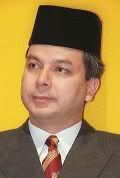 This posting is to PERSUADE Raja Nazrin Shah, the Sultan-in-waiting of my homestate Perak, to offer himself as the next Prime Minister of Malaysia.
Who says a royal cannot be a Prime Minister?
Our first PM was of royal lineage!
Raja Nazrin's recent speech (click here to read) delivered to Young Malaysians was a refreshing breeze in this current doldrum.
His speech jolted me out of this zombisque stupor.
This future King declared that Malaysians of all races, religions and geographic locations need to believe beyond a doubt that they have a place under the Malaysian Sun....and all have equal rights and responsibility to take ownership of their country and that Malaysia belongs to all Malaysians equally.
NEVERR had any our our leaders dared to utter such declarations (considered anathema). 'Beyond a shadow of a doubt; equal rights;' equally played mental gymnastics in my mind.
The grand Alliance of the 50s played its role in the fight for Independence. We still revere those founding fathers.
A new creature, the Barisan Nasional, complacent at never being challenged seriously. Today, it has lost its moral compass.
Today it (Barisan Nasional) is mired with a litany of diseases: corruption, decadence, profligacy, ignorance, misconduct, defilement, falsification, nefarious, chicanery, discrimination, coarseness and vileness.
-Bernard Khoo
Quote:
Excerpts: Read here for more"...This posting is to PERSUADE Raja Nazrin Shah, the Sultan-in-waiting of my homestate Perak, to offer himself as the next Prime Minister of Malaysia.
Raja Nazrin, without a shadow of a doubt you have the mettle to make long overdue changes.You have every equal right to claim the premiership, despite your royal status. Only with your leadership will Malaysia belong to all Malaysians equally..."
- Bernard Khoo ("Zorro-Unmasked')
We have been led like zombies into believing "semua-nya ok".
We want to change the rules. This country needs a make-over. This country must be revived with a massive blood transfusion.
HOW?
This posting is to PERSUADE Raja Nazrin Shah, the Sultan-in-waiting of my homestate Perak, to offer himself as the next Prime Minister of Malaysia.Who says a royal cannot be a Prime Minister?
Our first PM was of royal lineage!
Raja Nazrin's recent speech (click here to read) delivered to Young Malaysians was a refreshing breeze in this current doldrum.
His speech jolted me out of this zombisque stupor.
This future King declared that Malaysians of all races, religions and geographic locations need to believe beyond a doubt that they have a place under the Malaysian Sun....and all have equal rights and responsibility to take ownership of their country and that Malaysia belongs to all Malaysians equally.
NEVERR had any our our leaders dared to utter such declarations (considered anathema). 'Beyond a shadow of a doubt; equal rights;' equally played mental gymnastics in my mind.
The grand Alliance of the 50s played its role in the fight for Independence. We still revere those founding fathers.
A new creature, the Barisan Nasional, complacent at never being challenged seriously. Today, it has lost its moral compass.
Today it (Barisan Nasional) is mired with a litany of diseases: corruption, decadence, profligacy, ignorance, misconduct, defilement, falsification, nefarious, chicanery, discrimination, coarseness and vileness.
I have made my stand. It was a well-meaning post. ...my most sincere post to date.'Raja Nazrin,
Without a shadow of a doubt you have the mettle to make long overdue changes.
You have every equal right to claim the premiership, despite your royal status.
Only with your leadership will Malaysia belong to all Malaysians equally.'
-Bernard Khoo
Saturday, 14 April 2007
In Praise of Dr. Syed Husin Ali, Deputy President, Parti Keadilan Rakyat
From Letter to Editor, Malaysiakini: Read here
Quote:
 Prof. Syed Husin Ali, Deputy President of Parti Keadilan Rakyat
I have known and observed Prof Syed Husin Ali since the 1970s including when he was detained for six years under the ISA.
When I first got to know of him, I was secretary of the Bar Council Human Rights Committee, and we collected information on all ISA detainees in our efforts to get them released.
Before I even met him, from what I read of him including appeals from various persons on his behalf to the committee asking the committee to intercede with the Home Ministry, I distinctly remember feeling great respect, humility and wonder for a person who had been unjustly detained for six long years (he became the longest in detention by the time I became secretary) could still remain so unvindictive, forgiving and at peace with himself and the world.
When I finally met him after he was released, I also learnt he had a perennial sense of humour including at his own expense which I thought showed great self-confidence and stature.
I now believe that he is the quintessential ‘intellectual politician’ which Confucius said should be involved in leading any government.
He is the only living politician in whose hands I would be prepared to put my life in and that is saying a lot.
It means I view him as a person with no barrier of race, religion or creed and someone I can absolutely trust to make judgment calls based only on unshakeable ethics, good principles and wisdom.
God knows the world today needs more of such intellectual giants in politics - not the present lot of political dwarfs including those in the US and Great Britain.
Keadilan is indeed fortunate to have such a rare entity in their midst. Syed Husin Ali is not only an asset to his party but also a tremendous role model.
Quote:
".. He is the only living politician in whose hands I would be prepared to put my life in and that is saying a lot..."by Chew Swee Yoke
- Chew Swee Yoke,
Former Secretary, Bar Council Human Rights Committee
Prof. Syed Husin Ali, Deputy President of Parti Keadilan RakyatI have known and observed Prof Syed Husin Ali since the 1970s including when he was detained for six years under the ISA.
When I first got to know of him, I was secretary of the Bar Council Human Rights Committee, and we collected information on all ISA detainees in our efforts to get them released.
Before I even met him, from what I read of him including appeals from various persons on his behalf to the committee asking the committee to intercede with the Home Ministry, I distinctly remember feeling great respect, humility and wonder for a person who had been unjustly detained for six long years (he became the longest in detention by the time I became secretary) could still remain so unvindictive, forgiving and at peace with himself and the world.
When I finally met him after he was released, I also learnt he had a perennial sense of humour including at his own expense which I thought showed great self-confidence and stature.
I now believe that he is the quintessential ‘intellectual politician’ which Confucius said should be involved in leading any government.
He is the only living politician in whose hands I would be prepared to put my life in and that is saying a lot.
It means I view him as a person with no barrier of race, religion or creed and someone I can absolutely trust to make judgment calls based only on unshakeable ethics, good principles and wisdom.
God knows the world today needs more of such intellectual giants in politics - not the present lot of political dwarfs including those in the US and Great Britain.
Keadilan is indeed fortunate to have such a rare entity in their midst. Syed Husin Ali is not only an asset to his party but also a tremendous role model.
Wednesday, 11 April 2007
Why You Should NOT Give MCA Your Vote
From Letter to Editor, Malaysiakini : Read Here
by
Low Leng Hua
Quote:
"...With the next general election looming on the horizon, Chinese Malaysians must be careful in casting their votes.
(They should) NOT make the same mistake of the previous election whereby MCA candidates were overwhelmingly supported.
... many events since the previous election show that the MCA is UNABLE or UNWILLING to voice the concerns of the Chinese community in the country.
The way I see it, Koh is powerless to do anything if Umno decides that the post must be rotated.
Lately MCA and Umno have organised parties and events in conjunction with the Chinese New Year....(with) the tossing of many ‘yee sang’ and many other such similar activities in the press. Let’s not be deceived by all this.
If MCA wants to get the Chinese votes, they must do MORE than just host open houses and getting Umno leaders to toss ‘yee sang’.
Where Should the Chinese Community Votes Go To?
I would like to urge the Chinese community to vote for the Opposition during the next general election.
We have seen enough of the cowardice and timidity of the MCA in trying times. They are nothing but spokespersons for the Umno.
Let’s give DAP and Keadilan a chance.
As for me, I am casting my vote to anyone who contests against BN in my constituency.
Just like in the US in November last year when the win for the Democrats was not so much a reflection of support for the party but rather a protest note to the Republicans for their failure in Iraq.
So too will be my vote which will be more of a statement against BN rather than any expressed support for any opposition party.
by
Low Leng Hua
Quote:
Excerpts: Read here Low Leng Hua's article for more"...Do you want to know what is MCA’s greatest contribution is?
Yes, their greatest contribution was and is to the continued erosion of Chinese Malaysian rights to equal citizenship in this country!..." Read here for more in Letter to Editor Malaysiakini
-"Limkamput"
".....My vote which will be more of a statement against BN rather than any expressed support for any Opposition Party...."
- Low Leng Hua
"...With the next general election looming on the horizon, Chinese Malaysians must be careful in casting their votes.
(They should) NOT make the same mistake of the previous election whereby MCA candidates were overwhelmingly supported.
... many events since the previous election show that the MCA is UNABLE or UNWILLING to voice the concerns of the Chinese community in the country.
- The recent Umno general assembly has revealed the cowards in MCA as they did nothing even after the fiery speeches by Umno delegates threatening the Chinese community for daring to question their ‘ketuanan’.
- The remark last year by Singapore’s Lee Kuan Yew on the marginalisation of the Chinese community in Malaysia struck a chord with many non-bumiputeras here but what did the MCA do? They happily (most probably under the order of Umno) made a public statement refuting Lee’s claims. What they did was unthinkable when they themselves know about the uneven playing field in this country.
- The claim by Umno that the Malays in Penang were marginalised also revealed the inability of MCA to stand up and speak for the Chinese community when the Chinese were blamed for this so-called marginalistion. Penang Chief Minister Dr Koh Tsu Koon was humiliated in front of the prime minister and also the whole country.
....Is Penang not a state of Malaysia? If it is, doesn’t the constitution of the country apply there? And if the constitution applies, aren’t the Malays given the special rights and privileges as spelled out in it? By this reasoning, how can they still claim that they are marginalised?
Being unable to compete even with the special handicap points is not marginalisation. By the same token (in reference to the statement by Lee Kuan Yew on the marginalisation of the Chinese), being successful and wealthy in spite of discriminative policies does not mean that there is no marginalisation. - Let’s NOT forget the issue with Deputy Higher Education Minister Dr Ong Tee Kiat who was lambasted by Education Minister Hishammuddin Hussein Onn for raising doubts on the construction work of a Chinese school.
- MCA have also failed to do anything concrete on the issue of inter-faith discussions which were unceremoniously stopped under the order of the prime minister.
- The bumiputera equity calculation issue also saw MCA keeping timidly quiet and letting DAP do all the questioning on the perplexing set of data and methodology presented by the government.
- A recent report in a Chinese daily on the RM1.409 million given by the Education Ministry in 2006 for 248 Chinese schools is also a big joke.
The amount works out to about RM6,000 for each school. Seriously, what can you do with a RM6,000 budget for the whole year? A simple renovation for my small house costs more than RM10,000 alone!
Compare this to the RM600 million bonanza given by Abdullah Ahmad Badawi late last year to the 200 Umno constituencies for contract works and you can see that the MCA has failed the Chinese community in the education aspect.
The way I see it, Koh is powerless to do anything if Umno decides that the post must be rotated.
Lately MCA and Umno have organised parties and events in conjunction with the Chinese New Year....(with) the tossing of many ‘yee sang’ and many other such similar activities in the press. Let’s not be deceived by all this.
If MCA wants to get the Chinese votes, they must do MORE than just host open houses and getting Umno leaders to toss ‘yee sang’.
Where Should the Chinese Community Votes Go To?
I would like to urge the Chinese community to vote for the Opposition during the next general election.
We have seen enough of the cowardice and timidity of the MCA in trying times. They are nothing but spokespersons for the Umno.
Let’s give DAP and Keadilan a chance.
As for me, I am casting my vote to anyone who contests against BN in my constituency.
Just like in the US in November last year when the win for the Democrats was not so much a reflection of support for the party but rather a protest note to the Republicans for their failure in Iraq.
So too will be my vote which will be more of a statement against BN rather than any expressed support for any opposition party.
Tuesday, 10 April 2007
The Malaysian Chinese Dilemma: The Heavy Cost to the Nation
From Malaysiakini Letter to Editor: Read here
by
Dr.Hsu Dar Ren
Islamonline -8th May,2001:
"...Malaysian Prime Minister Mahathir Mohamad on Sunday expressed concern about a brain drain in the country if educational opportunities for non-Malays were restricted, and said Chinese and Indians should have access to more places in educational institutions."We will face a problem because the intelligent non-bumiputera [indigenous] Malaysians would be wooed by other countries interested in their capability," he said after opening an exhibition. Read here for more
Materia Medica Malaysiana - 2nd April 2007:
" Singapore’s gain will be Malaysia’s loss, this time over the recruitment of doctors. This follows the decision of the Singapore Government to allow medical graduates from Universiti Malaya and Universiti Kebangsaan Malaysia to practise in the city-state.UM and UKM are the first institutions within Asean to receive such approval in the republic, which was announced by Singapore's Ministry of Health on Friday. The Malaysian Medical Association (MMA), which said Singapore's move would worsen the shortage of medical specialists here, nevertheless welcomed the announcement that was also hailed by the Singapore Medical Association. MMA president Datuk Dr Teoh Siang Chin said the decision was to do with “quality, not quantity.” “It is a good thing for both patients and the profession. Doctors should be free to move where they want,” he said. On the medical “brain drain” impact on Malaysia, Dr Teoh said this was bound to occur in any case. " Read here for more
Education in Malaysia (1st May,2006)
"...Out of all the peers that my wife and I know who studied medicine overseas (Singapore, UK and Australia), probably 95% did not return to Malaysia....Those who studied in NUS or NTU in Singapore are very unlikely to come back to Malaysia....we have to ask whether those not returning are predominantly scholarship or non-scholarship holders. For example, the national costs for JPA sponsorees not returning is higher compared to a non-sponsoree.... the lack of returnees among PhD holders is also a concern especially given the sad state of our local universities. So if the government is concerned about brain drain, they can think through the issues systematically and find specific remedial measures rather than aim for more general strategies (such as making it easier for students to bring back luxury cars that they've bought while overseas) which are poorly targetted...." Read here for more
Who doesn’t want their children to be around them?
But at the same time, if the children don’t have good job prospects here, what would the parents do?
They would want the children to have the best chances and do something that they are happy with. And that means letting their children work overseas where the employment prospects are better, and where work satisfaction and upward mobility also better.
I asked my friend, ‘Why don’t you join your son Down Under?’
He answered that he loves Malaysia, he was born and bred here, his friends and relatives are all here, and his business is also here. He would feel out of place and it would not be easy for a middle-aged man to start his network and friends all over again in a foreign country.
The Very High Cost to the Nation
When a citizen’s child studies overseas, we lose precious foreign exchange and this is no small sum as an overseas education runs into hundreds of thousands of ringgit for each student.
Over the years, how many Malaysians have gone overseas to study? Malaysian used to be the biggest group of foreign students in Australia, the UK, etc.
How much money was lost?
And how many of these did not come back?
I have so many classmates working as consultants in the UK, Singapore and Australia that I have lost count. This is ‘brain drain’ and ‘brain loss’.
Human capital is now recognised as the most important asset in this flattening world. Many of these who stay abroad become very famous scientists, doctors, entrepreneurs, etc.
How much ‘brain’ was lost? No one can quantify that. Who knows, Malaysia would have become a First World country by now if we had all these brains realising their potential locally. Everyone, both bumi and non-bumi, would have benefitted more by now.
How about the human cost? How many families were separated? How many parents died a lonely death because their children were overseas?
The lists go on and the dilemma is getting more acute.
What can we do about this ?
We should in fact be more farsighted. Intake for local tertiary education should be based on merit, with maybe a small proportion reserved for socially-handicapped people.
For those studying overseas, try to lure them back, place them in GLCs such as Petronas, TNB, Telekom and government departments and let their promotion be based on merit.
That way, these companies can be much more successful, the country be more prosperous and there will be that much more job prospects.
In turn, the economic cake grows bigger and we then have a bigger capacity to offer affirmative action for the less-advantaged groups.
By being farsighted, we will be rewarded with every ethnic group getting a bigger share of the economy.
Read below related article - A "Letter to the Editor" in Star dated September 14, 2006
Malaysia's Loss is UK's Gain
by
Dr.Hsu Dar Ren
Related articles (click below):
"...Malaysian Prime Minister Mahathir Mohamad on Sunday expressed concern about a brain drain in the country if educational opportunities for non-Malays were restricted, and said Chinese and Indians should have access to more places in educational institutions."We will face a problem because the intelligent non-bumiputera [indigenous] Malaysians would be wooed by other countries interested in their capability," he said after opening an exhibition. Read here for more
" Singapore’s gain will be Malaysia’s loss, this time over the recruitment of doctors. This follows the decision of the Singapore Government to allow medical graduates from Universiti Malaya and Universiti Kebangsaan Malaysia to practise in the city-state.UM and UKM are the first institutions within Asean to receive such approval in the republic, which was announced by Singapore's Ministry of Health on Friday. The Malaysian Medical Association (MMA), which said Singapore's move would worsen the shortage of medical specialists here, nevertheless welcomed the announcement that was also hailed by the Singapore Medical Association. MMA president Datuk Dr Teoh Siang Chin said the decision was to do with “quality, not quantity.” “It is a good thing for both patients and the profession. Doctors should be free to move where they want,” he said. On the medical “brain drain” impact on Malaysia, Dr Teoh said this was bound to occur in any case. " Read here for more
"...Out of all the peers that my wife and I know who studied medicine overseas (Singapore, UK and Australia), probably 95% did not return to Malaysia....Those who studied in NUS or NTU in Singapore are very unlikely to come back to Malaysia....we have to ask whether those not returning are predominantly scholarship or non-scholarship holders. For example, the national costs for JPA sponsorees not returning is higher compared to a non-sponsoree.... the lack of returnees among PhD holders is also a concern especially given the sad state of our local universities. So if the government is concerned about brain drain, they can think through the issues systematically and find specific remedial measures rather than aim for more general strategies (such as making it easier for students to bring back luxury cars that they've bought while overseas) which are poorly targetted...." Read here for more
Excerpts of Dr. Hsu Dar Ren's article: Read here for more
".... Many Malaysian parents, mainly the non-bumiputeras, have a dilemma regarding their children’s education and future.
I just met a friend (who) is an engineer (with) two children. The eldest is a son who has just finished his studies in engineering in Australia. The second one is a daughter who has just gone to Australia to study business management.
His dilemma is this: He had no choice but to send his son overseas in order to provide him with a good education and at the same time to broaden his perspective. He could have asked his son to study locally but the problem was that his son might not be given the course of his choice since majority of places for medicine and engineering courses are reserved for bumiputera students.
My friend had to work very hard and had to be very thrifty in order to save to send his children overseas. And he is now near retirement age. He wants his son to come back Malaysia to work but he fears that his son may not get a good job and the prospect of promotions may be limited.
So he asked me what to do.
I told him this is the dilemma faced by many, many Chinese and Indian Malaysian parents.
They would want the children to have the best chances and do something that they are happy with. And that means letting their children work overseas where the employment prospects are better, and where work satisfaction and upward mobility also better.
I asked my friend, ‘Why don’t you join your son Down Under?’
He answered that he loves Malaysia, he was born and bred here, his friends and relatives are all here, and his business is also here. He would feel out of place and it would not be easy for a middle-aged man to start his network and friends all over again in a foreign country.
The Very High Cost to the Nation
When a citizen’s child studies overseas, we lose precious foreign exchange and this is no small sum as an overseas education runs into hundreds of thousands of ringgit for each student.
Over the years, how many Malaysians have gone overseas to study? Malaysian used to be the biggest group of foreign students in Australia, the UK, etc.
How much money was lost?
And how many of these did not come back?
I have so many classmates working as consultants in the UK, Singapore and Australia that I have lost count. This is ‘brain drain’ and ‘brain loss’.
Human capital is now recognised as the most important asset in this flattening world. Many of these who stay abroad become very famous scientists, doctors, entrepreneurs, etc.
How much ‘brain’ was lost? No one can quantify that. Who knows, Malaysia would have become a First World country by now if we had all these brains realising their potential locally. Everyone, both bumi and non-bumi, would have benefitted more by now.
How about the human cost? How many families were separated? How many parents died a lonely death because their children were overseas?
The lists go on and the dilemma is getting more acute.
What can we do about this ?
We should in fact be more farsighted. Intake for local tertiary education should be based on merit, with maybe a small proportion reserved for socially-handicapped people.
For those studying overseas, try to lure them back, place them in GLCs such as Petronas, TNB, Telekom and government departments and let their promotion be based on merit.
That way, these companies can be much more successful, the country be more prosperous and there will be that much more job prospects.
In turn, the economic cake grows bigger and we then have a bigger capacity to offer affirmative action for the less-advantaged groups.
By being farsighted, we will be rewarded with every ethnic group getting a bigger share of the economy.
Read below related article - A "Letter to the Editor" in Star dated September 14, 2006
Malaysia's Loss is UK's Gain
by
'MALAYSIAN OXFORD DON,'
Oxford,
UK
"I HAVE a master’s degree from Imperial College and am completing my doctoral studies in Engineering Science at the University of Oxford in the UK.
I too face a similar dilemma as Sylvia Hsu-Chen Yip from Canberra, “We need to feel appreciated” (The Star, Sept 12). I am unsure whether I would return home after completing my PhD.
This is a similar dilemma being faced by many non-bumiputra Malaysians in the UK. I joined a Malaysian public university in the hope of being able to pursue my PhD abroad.
At the university, I learned that there were two staff study support programmes for postgraduate degrees, a bumiputra programme and a non-bumiputra programme.
I was so disappointed to learn of this that I left the university in three months. MARA used to give students loans to study abroad, and students used to only pay a percentage of the loan upon completing their studies.
If you had a first class degree, the loan became a scholarship. If you had a second upper degree, you paid 10% and so on. There were also loans for postgraduate studies, but I was not eligible for them.
I am currently completing my PhD through personal funds.
Anxious to find work to support myself, I was invited as a lecturer for Magdalen College, University of Oxford, in my first term at Oxford.
Even my supervisor was amazed by this, as he mentioned that it was unusual for someone to be invited to teach, having just arrived at Oxford.
Extremely pleased with the quality of my teaching, the University of Oxford asked me to continue teaching until the end of my studies.
I was recommended to Brasenose College, University of Oxford, which subsequently appointed me to a more substantial lectureship at the college.
Recognising the quality of my work, Brasenose College Oxford also asked me to help in undergraduate admissions in December.
I will be interviewing students who apply to study Engineering Science at Oxford.
My research has not suffered. My supervisor was surprised that I could not secure a scholarship, and is trying to secure funding for me from the British government.
I have also just been invited to settle down in the UK as a “Highly Skilled Migrant”, a status granted by the British Home Office based on my education, experience and achievements at international level.
I really want to return home as I want to be with my parents and family. Unfortunately, as I need to repay the family loans which helped me to complete my PhD, I will be staying on in the UK to work.
I have been told that any company would be more than willing to employ me, what with a master’s from Imperial and a PhD from Oxford.
I feel unappreciated in Malaysia. I could have contributed so much to the country, especially considering that Malaysia aims to become a regional education hub.
Malaysia’s loss is UK’s gain. "
- MALAYSIAN OXFORD DON, Oxford, UK.
Monday, 9 April 2007
Racial Riot of May 13, 1969: It Had To Happen !
From 'No Holds Barred' Blog - Read Here
by
Raja Petra Kamarudin
Quote:
Before May 1969
".... I was quite close to Eddie Wong because he once saved my life in Pasar Road, just off Pudu.
We had stopped at a traffic light when four burly Chinese surrounded my bike and started shouting at me in Chinese. I could not understand what they were saying but Eddie Wong quickly interjected and explained something . They walked off after patting me on the back as a sort of apology.
Eddie Wong then signalled to me to get out of there quickly. When we reached the Kampong Pandan junction, I asked him what that was all about.
“They were asking you if you are Malay and I told them that you are a Serani.” (‘Serani’ means ‘Eurasian’).
“What if you said I am Malay?”
“Then they would have stabbed you. Did you not see one of them holding a knife behind his back?”
There was another Eddie I knew, Eddie Chan, the motorbike racer and a member of the 18 Immortals (Sap Pat Loh Hon) of Bukit Bintang. Eddie Chan and I had seen each other at the Batu Tiga race track, but we had never spoken to each other.
One night, while I was waiting to get into the Cathay cinema in Bukit Bintang, I was surrounded by six Chinese 18 Immortals boys. They asked me in Malay where I came from.
I replied Bangsar. One of the boys grabbed me by the throat and pulled out a knife.
Eddie Chan, who was sitting on the railings in front of the Cathay, saw what was coming down and he shouted something in Chinese. The chap gripping my throat let go and Eddie Chan signalled to me to come over.
I walked over to where Eddie Chan was sitting and he asked me whether I am the one in the Yamaha team. I replied that I am and he asked me whether I was crazy coming to Bukit Bintang.
“This is Sap Pat Loh Hon territory,” said Eddie Chan. “You are a Malay from Bangsar. They will kill you here. You are lucky I am here tonight if not you will be dead by now.”

1968:"Our gang BEFORE May 13 taught us that we were of different races"
(Photo courtesy of RPK)
Yes, Pudu, Pasar Road, Bukit Bintang, Cheras; these are all out of bounds if you are Malay, especially if you are from Bangsar.
In fact, Petaling Street is no better. I was in Petaling Street and I saw one Malay chap get beaten up by two Chinese toughies. He had made the mistake of asking one street vendor the price of something. He then asked the vendor to reduce the price and when the guy did, the Malay changed his mind and walked away without buying the item.
“Bodoh punya Melayu! Hoi, balek kampung tanam padilah, Melayu bodoh!” Then this Malay made a second mistake. He turned around to look the Chinese in the eye. They pounced on him and beat the shit out of him.
Even Brickfields, the area neighbouring my Bangsar home, was not safe.
On the way home from school one day at the Railway Club in Brickfields, one Gang 36 Chinese chap chased me with a parang. I did not have time to start my bike so I ran across the football field with him hot on my heels. I reached the teh tarek stall in front of the YMCA and Dennis Lourdes, the local Gang 08 chief, who witnessed the whole thing came to my aid.
“Get behind me Pete!” he shouted. The Chinese wielding the parang tried to push Dennis aside to get to me and I started running again. “Don’t run!” Dennis shouted. He then pulled out a parang from a stack of firewood and faced the Chinese chap who froze in his tracks.
Dennis then escorted me back to my bike and I zoomed home.
Yes, that was Kuala Lumpur in 1968.
Another of my friends, Richard, was shot dead in 1968 as he played Mah Jong. Dennis was stabbed to death outside his house. Rawi, another Gang 08 leader, was found dead in the Pahang River. Dinky, Dennis’ brother-in-law, was poisoned and died soon after. Moses disappeared and was never seen again.
Kuala Lumpur had become impossible.
Malays could not stray into Chinese or Indian areas, and vice versa. I personally faced death many times when I ventured into Brickfields, Pasar Road and Bukit Bintang.
I was even beaten up by four Malays in Bangsar because I did not look Malay enough. One actually pulled out a knife and when I saw it in his hand I just bolted out of there.
In 1969, the opposition political party won in Bangsar and Brickfields and organised a victory parade in their ‘conquered’ areas. “Bunuh Melayu! Mampus Melayu! Melayu balek kampunglah!” and much, much more were shouted during the victory parade.That was on 11 May 1969.
Two days later, on 13 May 1969, Kuala Lumpur ‘exploded’ and blood was spilled on the streets.
True, Umno organised the 13 May 1969 rally that triggered the race riot that same day.
True, Umno was just responding to the opposition victory parade two days earlier and it was the opposition that started it.
True, two wrongs do not make a right and just because the opposition started the whole thing and provoked the Malays during their victory parade does not mean that Umno now had a licence to kill.
But if it had not been the 11 May 1969 opposition parade, or the 13 May 1969 Umno organised rally, or even the May 1969 general election, blood would have eventually spilled on the streets of Kuala Lumpur anyway.
It would have only been a matter of time and all it needed was a trigger.
The May 1969 general election was just the trigger. It was NOT the cause.
The 13 May 1969 race riot does have its silver lining though, notwithstanding the fact that this sounds very cruel when put that way.
Thereafter, the police cleaned up the streets and banished the secret society ‘Tiger Generals’ to Pulau Jerejak.It had to happen NOT because of the elections.
It had to happen NOT because of the political party parades and rallies.
It had to happen because the gangs and secret societies controlled the streets and decided who can and cannot venture into their territory.
It had to happen because the gangs and secret societies and not the government controlled the streets.
But the 13 May 1969 race riot changed all that.
by
Raja Petra Kamarudin
Quote:
Excerpts: Read here for more".....The 13 May 1969 race riot was because it was time for such a race riot to happen and Kuala Lumpur was ripe and waiting to explode.
The 13 May 1969 race riot had to happen.
It had to happen because the gangs and secret societies and not the government controlled the streets.
... blame the gangs and secret societies for enforcing this segregation and territorial wars. And blame the government for losing control of the streets to the gangs and secret societies.
The 13 May 1969 race riot changed all that.The government took back the streets from the gangs and secret societies.
The government made it possible again for Chinese to go to Malay areas and for Malays to go to Chinese areas. In 1968 and 1969, they would do so at the risk of losing their lives.
And in that sense the 13 May 1969 race riot was good.
Today, Umno, MCA and MIC are controlled by gangsters. And if the IGP pushes too hard to clean up the towns and cities he may find himself facing early retirement.
Now, the gangs and secret societies even ‘own’ the police chiefs of certain states."
-Raja Petra Kamarudin
Before May 1969
".... I was quite close to Eddie Wong because he once saved my life in Pasar Road, just off Pudu.
We had stopped at a traffic light when four burly Chinese surrounded my bike and started shouting at me in Chinese. I could not understand what they were saying but Eddie Wong quickly interjected and explained something . They walked off after patting me on the back as a sort of apology.
Eddie Wong then signalled to me to get out of there quickly. When we reached the Kampong Pandan junction, I asked him what that was all about.
“They were asking you if you are Malay and I told them that you are a Serani.” (‘Serani’ means ‘Eurasian’).
“What if you said I am Malay?”
“Then they would have stabbed you. Did you not see one of them holding a knife behind his back?”
There was another Eddie I knew, Eddie Chan, the motorbike racer and a member of the 18 Immortals (Sap Pat Loh Hon) of Bukit Bintang. Eddie Chan and I had seen each other at the Batu Tiga race track, but we had never spoken to each other.
One night, while I was waiting to get into the Cathay cinema in Bukit Bintang, I was surrounded by six Chinese 18 Immortals boys. They asked me in Malay where I came from.
I replied Bangsar. One of the boys grabbed me by the throat and pulled out a knife.
Eddie Chan, who was sitting on the railings in front of the Cathay, saw what was coming down and he shouted something in Chinese. The chap gripping my throat let go and Eddie Chan signalled to me to come over.
I walked over to where Eddie Chan was sitting and he asked me whether I am the one in the Yamaha team. I replied that I am and he asked me whether I was crazy coming to Bukit Bintang.
“This is Sap Pat Loh Hon territory,” said Eddie Chan. “You are a Malay from Bangsar. They will kill you here. You are lucky I am here tonight if not you will be dead by now.”
1968:"Our gang BEFORE May 13 taught us that we were of different races"
(Photo courtesy of RPK)
Yes, Pudu, Pasar Road, Bukit Bintang, Cheras; these are all out of bounds if you are Malay, especially if you are from Bangsar.
In fact, Petaling Street is no better. I was in Petaling Street and I saw one Malay chap get beaten up by two Chinese toughies. He had made the mistake of asking one street vendor the price of something. He then asked the vendor to reduce the price and when the guy did, the Malay changed his mind and walked away without buying the item.
“Bodoh punya Melayu! Hoi, balek kampung tanam padilah, Melayu bodoh!” Then this Malay made a second mistake. He turned around to look the Chinese in the eye. They pounced on him and beat the shit out of him.
Even Brickfields, the area neighbouring my Bangsar home, was not safe.
On the way home from school one day at the Railway Club in Brickfields, one Gang 36 Chinese chap chased me with a parang. I did not have time to start my bike so I ran across the football field with him hot on my heels. I reached the teh tarek stall in front of the YMCA and Dennis Lourdes, the local Gang 08 chief, who witnessed the whole thing came to my aid.
“Get behind me Pete!” he shouted. The Chinese wielding the parang tried to push Dennis aside to get to me and I started running again. “Don’t run!” Dennis shouted. He then pulled out a parang from a stack of firewood and faced the Chinese chap who froze in his tracks.
Dennis then escorted me back to my bike and I zoomed home.
Yes, that was Kuala Lumpur in 1968.
Another of my friends, Richard, was shot dead in 1968 as he played Mah Jong. Dennis was stabbed to death outside his house. Rawi, another Gang 08 leader, was found dead in the Pahang River. Dinky, Dennis’ brother-in-law, was poisoned and died soon after. Moses disappeared and was never seen again.
Kuala Lumpur had become impossible.
Malays could not stray into Chinese or Indian areas, and vice versa. I personally faced death many times when I ventured into Brickfields, Pasar Road and Bukit Bintang.
I was even beaten up by four Malays in Bangsar because I did not look Malay enough. One actually pulled out a knife and when I saw it in his hand I just bolted out of there.
In 1969, the opposition political party won in Bangsar and Brickfields and organised a victory parade in their ‘conquered’ areas. “Bunuh Melayu! Mampus Melayu! Melayu balek kampunglah!” and much, much more were shouted during the victory parade.That was on 11 May 1969.
Two days later, on 13 May 1969, Kuala Lumpur ‘exploded’ and blood was spilled on the streets.
But if it had not been the 11 May 1969 opposition parade, or the 13 May 1969 Umno organised rally, or even the May 1969 general election, blood would have eventually spilled on the streets of Kuala Lumpur anyway.
It would have only been a matter of time and all it needed was a trigger.
The May 1969 general election was just the trigger. It was NOT the cause.
Anything could have been the trigger. It just happened to be the May 1969 general election and the 11 May and 13 May rallies and parades.
.The 13 May 1969 race riot was because it was time for such a race riot to happen and Kuala Lumpur was ripe and waiting to explode.The 13 May 1969 race riot was NOT because of the 11 May 1969 opposition parades. The 13 May 1969 race riot was NOT because of the 13 May 1969 Umno rally. The 13 May 1969 race riot was NOT because of the May 1969 general election
The 13 May 1969 race riot does have its silver lining though, notwithstanding the fact that this sounds very cruel when put that way.
Thereafter, the police cleaned up the streets and banished the secret society ‘Tiger Generals’ to Pulau Jerejak.
Today, Malays can go to Bukit Bintang, Pudu, Cheras, Pasar Road and Brickfields. Today, Chinese can go to Bangsar, Kampong Pandan, Kampong Baru and Kampong Datuk Keramat.
No one fears for their life any longer when they stray into another area like they used to in 1968 and 1969.
The 13 May 1969 race riot had to happen.
It had to happen because the gangs and secret societies controlled the streets and decided who can and cannot venture into their territory.
It had to happen because the gangs and secret societies and not the government controlled the streets.
But the 13 May 1969 race riot changed all that.
After 1969
The government took back the streets from the gangs and secret societies. The government made it possible again for Chinese to go to Malay areas and for Malays to go to Chinese areas. Today, Chinese go to eat Nasi Lemak Antarabangsa in Kampong Baru.
Today, Malays go to shop in Bukit Bintang. In 1968 and 1969 that would have been impossible. In 1968 and 1969 they would do so at the risk of losing their lives.
What went wrong? How did all this come about?
How did Kuala Lumpur get divided into Malay, Chinese and Indian areas and you ventured into the areas of the other races at your own peril?
I do not know how the government lost the streets to the gangs and secret societies. But the 13 May 1969 race riot changed all that.
And in that sense the 13 May 1969 race riot was good.
But don’t blame the Chinese. Don’t blame the Malays. Don’t blame the Indians either. Blame all three; the Malays, Chinese and Indians. All are to be faulted. All must be blamed.
And blame the gangs and secret societies for enforcing this segregation and territorial wars. And blame the government for losing control of the streets to the gangs and secret societies.
This is not quite a thing of the past though.
Twenty-Eight Years Later (2007)
TODAY, the gangs and secret societies again control the streets.
But today they control entire cities, not just segments of the cities.
Today, the gangs and secret societies control the night clubs, discos, karaoke joints, brothels, pirate VCD trade, loan shark (Ah Longs) business, gambling (in particular the slot machines or one-arm bandits), and much more.
The underground businesses are all owned by the gangs and secret societies, many headed by Chinese Datuks. This is an ‘improvement’ over 1968 and 1969.
How is this possible?
Well, according to what the mainstream media reported, the gangs and secret societies now even ‘own’ the police chiefs of certain states.
This is not what I say. This is what the government-owned mainstream media says. And the IGP appears to agree with them.
Yes, I have lived under this environment before. And you know what?
In the era of 1968 and 1969 the gang and secret society leaders were on the streets. Today, they are in the political parties. Today, Umno, MCA and MIC are controlled by gangsters. And if the IGP pushes too hard to clean up the towns and cities he may find himself facing early retirement.
Remember what one Selangor Assemblywoman retorted in her response to the Kampong Medan clash between the Malays and Indians? The Indians were asking for it and had it coming, she said.
Yes, the politicians protect the gangs and secret societies because they are useful. Hey, even the CIA uses terrorist groups to do their dirty work."
-Raja Petra Kamarudin
Thursday, 5 April 2007
MUST READ ARTICLE !! : Why Public Malaysian Universities Will NEVER Improve: An Inside-Assessment by a Professor
From Malaysia-Today- article written by "Jombo": Read Here
"A case of obscene tolerance of mediocrity and sub-standards at our highest institutions of learning"
"A case of obscene tolerance of mediocrity and sub-standards at our highest institutions of learning"
I used to work in a Malaysian university holding a Professorial post on contract. I could not be confirmed because I do not have a SPM (more later).
I worked in research dealing with stem cells but left after 3 years despite the offer of renewal for another 2 years.
I am a Malaysian Chinese who spent nearly 20 years overseas in some of the big name universities in Australia and the UK.
After observing the system from the INSIDE, I can tell you that Malaysian universities will NEVER improve, and whatever improvement you see will NOT last.
I will set out my reasons in a concise manner.
1) Staff are not hire on merit
I’ve noticed that most the new staff hired are Malays. There are very few Chinese and Indian staff on tenure track.
In fact most of the non-Malays I came across are hired on contract. It does not take a genius to know that if you don’t put people on tenure, they will NOT give their best.
One day I asked a DVC in private WHY there are so few non-Malay staff on tenure. I was surprised when he told me directly that there was an unofficial quota.
He further told me that there is a lot of resistance from the junior Malay staff when non-Malays come in because they perceived the non-Malays are better researchers and academics.
He also told me that good non-Malay staff go overseas, especially to Singapore so they do NOT want to waste their time in hiring non-Malay staff. I do not if this is true.
2) No research culture since promotion is not based on research
Despite all the talk by the Minister, there is NO research culture. In fact, most local academics are NOT interested in research.
A few of the Malay academics told me straight in the face that they like group or cluster research because it is “easier”. They don’t go for excellence or individual research.
They also tell me that promotion is based on administrative work and “cables” to the Minister or VC.
In fact a few of them tell me that good researchers are punished by the whole group because they make the others look bad or lazy.
Thus not matter how good you are when you join, by putting you in a “research group” they are slowing the good ones down and before you know it, they become part of the group culture.
In the university where I was working, the VC or DVC did NOT published a single paper in an international referred journal.
Except for one DVC, the VC and the other DVC do NOT even have a single book.
The DVC with a book is a textbook in Malay and when I looked at it, I realized that it was mainly translation he passed off as his own work.
Two of the DVC were active with UMNO and the VC is a relative of an UMNO strongman. Thus the “cable” theory appears to be true.
A retired Malay professor told me the most important criteria for promotion is “how you get along with people”.
He also told me if you are good, they will bring you down because if the universities have standards, then they cannot survive in their jobs.
In his own words, more than 4/5 of the current university staff will NEVER be able to get academic jobs in a REAL university.
3) Pettiness and Jealously
The Malay culture is based in group behaviors and gossip and during my time there, I noticed that even academic staff took a lot of time in gossiping about nonsense.
Most of the female academic staff used gossip to bring down capable people. For example, one Malay guy who just came back with his PhD had to endure a lot of gossip, all because one female academic staff complained that he did not hold a kenduri to celebrate his successful completion of PhD.
Another time, all the academic staff, including the Dean, ganged up against me because I had managed to published a paper in a leading international journal. Immediately after my name was mentioned by the VC as an example, the Dean started telling other academic staff that I did not “contribute enough” to the faculty.
I was under the impression that I was there to do research and publish but for these people, who cannot do research, the priority was on social events.
This Dean was not even an academic in the first place but was a civil servant BEFORE he was appointed Dean. All the academics he has appointed since he became Dean all come from his state and all are local graduates.
So how to improve?
There are many more things I want to say but this are the main reasons why Malaysian universities have no hope of ever being world class.
As long as everything is based on race, pettiness and not on merit, I cannot see a way out.
I am writing this not out of frustration ( I am now overseas) but to also show why local universities waste so much money joining the Geneva Exhibitions and the like (as reported in the newspapers).
The sad truth is when you have people who cannot publish in real academic journals, then they play silly games like join exhibitions.
The USM DVC who defended this practice would be laughed at if he was at a REAL university. In fact, to be frank, people like him cannot get a real academic job in Singapore, NZ or US. He is a symbol of what is wrong at local universities.
In sum, you have the blind leading the blind.
Raja Muda of Perak: Keynote Address on "NATIONAL UNITY AND DEVELOPMENT IN MALAYSIA: PROSPECTS AND CHALLENGES FOR NATION BUILDING"
Quote:
KEYNOTE ADDRESS BY DULI YANG TERAMAT MULIA RAJA MUDA PERAK DARUL RIDZUAN RAJA NAZRIN SHAH IBNI SULTAN AZLAN MUHIBBUDDIN SHAH AT THE 'YOUNG MALAYSIANS' ROUNDTABLE DISCUSSION ON NATIONAL UNITY AND DEVELOPMENT IN MALAYSIA: PROSPECTS AND CHALLENGES FOR NATION BUILDING
DATE: 3 APRIL 2007 TIME: 8:45AM
VENUE: BAR COUNCIL, KUALA LUMPUR
Ladies and Gentlemen:
1. It is my pleasure to be here to deliver the keynote address at this Roundtable Discussion on National Unity and Development in Malaysia: Challenges and Prospects for Nation Building. I am always happy to take part in an event where there are many young informed Malaysians. I find that this is time well spent. Not only does it give me a chance to share my thoughts, but it also lets me do a bit of opinion research among the younger generation. We like to say that our youths are the future of this country, but then we proceed to ignore or marginalise them. We want our future generations to be able to think and act wisely, but then we do not give them sufficient opportunities to do so.
2. In my view, this is not a good way to prepare those who will take our place. If the young are to be good leaders and citizens, they must be exposed to more than just abstract concepts. Even those nation states which have failed miserably have had great political ideals. I believe that good and upright leadership must be demonstrated. It has to be both taught and observed at work. Then, those who are found to be able must be mentored by those who are capable. In this way, success can be learned and replicated. Finally, the young must be given responsibilities they can handle. They should be allowed to make mistakes along the way as part of their overall learning process. If we do these things, our actions will echo loudly into the future.
3. My address this morning is on the challenges and prospects of nation building, a topic that is of the greatest and gravest importance. Nation building is essential to national unity which lies at the heart of what this country was, is and will be. With the passage of time, it seems that we are starting to forget this and it is imperative that we do not. In the time available, I hope to say enough to provide some fuel for the discussions to follow. It is my earnest wish that you will gain some further perspectives on the nature of nation building and that you will also deliberate on specific actionable ways to further it in this country.
4. Confucius insisted that language must be properly used if things are to get done, if justice is not to go astray, and if people are not to "stand about in helpless confusion." He disapproved of those who misused words to hide their true intentions and actions. So what exactly is nation building? Not surprisingly, there are many definitions, some which differ by a little and others by quite a lot. In his book, The Making of a Nation, for example, Professor Cheah Boon Kheng defined it as "both economic progress and socio-political integration of a nation, i.e. prosperity and national unity." This captures what are hopefully the two end results of nation building, but it makes no mention of its nature and process. I prefer the more common understanding, which is that it is the use of state power across different dimensions to ensure that a country is politically stable and viable in the long term. These dimensions include ethnicity and religion.
5. As a brief footnote, it should be noted that nation building is a heated and even hated notion in some parts of the world. The main reasons for this are, first, that it is taking place in the midst of great domestic turmoil and, second, that it is primarily initiated and managed by foreign powers. Trying to cobble a functioning state by papering over deep social and political rifts is, of course, easier said than done. History has shown us time and again, that it is much easier to break down, rather than build up, nations.
6. In the case of Malaysia, nation building has occurred in generally peaceful circumstances. It was not imposed by another country. And it is undertaken mainly by collective choice rather than compulsion. The fact that we have been able to forge a nation without resorting to the rule of the gun has made us something of a rarity and a case to be studied, if not emulated. It has allowed a relatively effective system of governance to develop. Our track record at development and resolving problems such as illiteracy, poverty and poor health has been good.
7. There is, of course, much more that can be done. Our institutions of governance are far from perfect and quality improvements will probably occupy us for at least the next fifty years, if not longer. Nevertheless, for all the criticisms that have been made, it is only common sense that we could not have survived, let alone prosper, these last 50 years if government institutions had not been responsive or effective.
8. So what are the central challenges to nation building going forward? Let me speak first more generally about the world, and then move specifically to Malaysia. To my mind, there are many challenges, but the one that stands out most is that of having to balance the need for change with that of continuity. Globalisation, in particular, has unleashed sweeping economic, political, social and cultural transformations that have weakened national institutions, values and norms. It is as if all the boats on the ocean had suddenly lost their anchors, rudders and compasses overnight. Naturally, this has produced a strong reaction in the form of a desire to preserve identity, character and tradition. These are among the strongest motivations known to mankind and have been at the foreground or background of practically every conflict that has ever been waged. Add to this, a deep sense of deprivation, powerlessness and injustice, both real and imagined, and the tension between change and continuity mount greatly.
9. Managing change on a national level is never easy, and certainly not on the scale and speed that we are witnessing. Multi-ethnic countries have to be especially watchful, and particularly if they have a weak sense of national collective identity. In the absence of a strong binding nationalism, they are prone to polarisation and competition along ethno-religious lines. The state, which may well start out by being a relatively honest broker, can become increasingly pressured to act in ways that favour the interests of one group over another. If the pendulum swings too far in one direction, dissatisfaction and frustrations will inevitably result. These can be expressed in ways that range from passive non-cooperation to active opposition and even violent conflict. To a large extent, this has led to the fragmentation of states.
10. Countries need to recognise the larger macro forces at work and understand their implications. They have to engage creatively to ensure that there are sufficient investments in social capital and cohesion. They must create and capitalise on co-operative systems within societies. In recent times, it has become usual to try and place the blame for the disintegrating state of world affairs on the doorstep of religion. This is a misunderstanding of the first order. Religion is not the cause of societal dystrophy; it is the antidote. It is a social stabiliser that allows believers to reconnect to values that are fast being lost in today's ever more materialistic and self-centred world.
11. What does Malaysia have to do to ensure that it continues to be successful at nation building? Psychologists say that our short-term memory can only hold seven items. Let me outline seven guidelines that I think will have to be borne in mind in future national building efforts.
12. First, Malaysians of all races, religions, and geographic locations need to believe beyond a shadow of a doubt that they have a place under the Malaysian sun. Only when each citizen believes that he or she has a common home and is working towards a common destiny, will he or she make the sacrifices needed for the long haul. In Malaysia, the Federal Constitution, the Rukun Negara and Vision 2020 encapsulate the rights, hopes and aspirations of the population in a way that no other documents do. The integrity of these documents must be defended and promoted, especially the first.
13. Second, when we seek solutions to problems in nation building, we must be careful not to assume away problems. Nation building is required precisely because there are stark differences within society. If we all walked, talked and thought the same, it would probably not be needed. There will therefore be chauvinistic groups in this country, just as there are in others. They will fight the idea of national unity, block social change and try to be politically dominant. The existence of these groups, however, does not mean that nation building is a futile exercise. It does mean that we must be prepared to negotiate our way through and around these differences. We can, for example, create social movements that aim to enlighten and dissuade popular support being given to them.
14. Third, nation building requires accommodation and compromise. In our haste to be prescriptive, we should not be so idealistic that we are incapable of also being practical. We should not allow perfection to be the enemy of the good. Yes, we should seek the best solutions and expect the highest standards of performance. But we should also be prepared to sacrifice some part of our positions for the good of the whole. The virtues of pure self-interest are largely a myth. What seems to be a reality is that individuals end up worse off when they act out of self-interest, as opposed to acting in their collective group interests.
15. Fourth, if nation building is to be successful, enforced solutions must be avoided. Nation building is effectively rendered null and void by coercion or the threat of violence. 'Might' cannot and must not be shown to be 'right'. If solutions cannot be found within the political and social structures, there will be a strong temptation to resort to illegitimate ways and means.
16. Fifth, nation building occurs when society is open, tolerant and forward-looking. So important are these values that they are embedded in Vision 2020's nine strategic challenges, as are those of mature democracy, caring society and innovation. Only by being inclusive and participative can the various sectors of our society be productively engaged. It follows that all forms of extremism, chauvinism, racism and isolationism must be guarded against. They must be soundly sanctioned socially, politically and, if necessary, also legally.
17. Sixth, nation building is a process rather than an outcome. When Malaysia started off 50 years ago, there were no examples to study. There were no manuals to follow. Mistakes were made and, to a greater or lesser extent, lessons have been learned. While a sense of impatience is perhaps fully understandable, nation building takes place over a period of time and only with persistence. Where there is no trust, trust has to be built. Where there is no cooperative network, one has to be established. Building on layers of foundation is the only way to ensure that the process is solid and sustainable.
18. Seventh, the political, social and economic incentives must reward good behaviour and penalise bad. I know that this statement is virtually self-evident, but it is a fact that many countries are as likely to punish good behaviour as to reward it. After all, if there are benefits for corruption, then there is a real cost to being honest. The incentives for building up a nation must be greater and more compelling than breaking it down. The price of racial and cultural intolerance must be made prohibitively high.
Ladies and Gentlemen:
19. I believe fostering national unity is the responsibility of every Malaysian. However, schools, institutions of higher learning and sports centers have a very special role to play. This is because the sense of national unity is best inculcated in the young. Through textbooks, sports and interaction, educators should eliminate ethnic stereo-types. Through the imaginative teaching of the history of Islamic, Chinese and Indian civilisation, educators could foster greater understanding among different ethnic groups.
20. It is said that it takes a village to raise a child. I believe this is true. To me the village comprises three main institutions - family, school and community. From birth we should be taught to respect and honour each other's culture and heritage. Learning to interact with others is part of this process. Playing with children of other races on the play ground and in friends' homes, we learn to go beyond the colour lines early in life. In school we should be taught about other cultures and beliefs under the same roof as others of different ethnic groups - once again cutting through the colour lines.
Ladies and Gentlemen:
21. I am aware that there are many Malaysians who are deeply troubled at the state of national unity in this country. What I have tried to do today is disabuse you of the notion that there are any 'quick fix' solutions in nation building. If you look closely enough at any country, even ones that are regarded today as highly successful such as Japan, you will find there have been episodes in its past where events were very tenuous. I hope we will do our best to guard against cynicism and hopelessness. And I hope we will all stay the course. Failure, may I remind you all, is a costly option.
22. I wish all speakers, facilitators and participants a constructive and fulfilling day ahead.
Full text of Raja Nazrin's keynote address at the Bar Council"....In Malaysia, the Federal Constitution, the Rukun Negara and Vision 2020 encapsulate the rights, hopes and aspirations of the population in a way that no other documents do. The integrity of these documents must be defended and promoted, especially the first."
-Raja Muda of Perak
KEYNOTE ADDRESS BY DULI YANG TERAMAT MULIA RAJA MUDA PERAK DARUL RIDZUAN RAJA NAZRIN SHAH IBNI SULTAN AZLAN MUHIBBUDDIN SHAH AT THE 'YOUNG MALAYSIANS' ROUNDTABLE DISCUSSION ON NATIONAL UNITY AND DEVELOPMENT IN MALAYSIA: PROSPECTS AND CHALLENGES FOR NATION BUILDINGDATE: 3 APRIL 2007 TIME: 8:45AM
VENUE: BAR COUNCIL, KUALA LUMPUR
Ladies and Gentlemen:
1. It is my pleasure to be here to deliver the keynote address at this Roundtable Discussion on National Unity and Development in Malaysia: Challenges and Prospects for Nation Building. I am always happy to take part in an event where there are many young informed Malaysians. I find that this is time well spent. Not only does it give me a chance to share my thoughts, but it also lets me do a bit of opinion research among the younger generation. We like to say that our youths are the future of this country, but then we proceed to ignore or marginalise them. We want our future generations to be able to think and act wisely, but then we do not give them sufficient opportunities to do so.
2. In my view, this is not a good way to prepare those who will take our place. If the young are to be good leaders and citizens, they must be exposed to more than just abstract concepts. Even those nation states which have failed miserably have had great political ideals. I believe that good and upright leadership must be demonstrated. It has to be both taught and observed at work. Then, those who are found to be able must be mentored by those who are capable. In this way, success can be learned and replicated. Finally, the young must be given responsibilities they can handle. They should be allowed to make mistakes along the way as part of their overall learning process. If we do these things, our actions will echo loudly into the future.
3. My address this morning is on the challenges and prospects of nation building, a topic that is of the greatest and gravest importance. Nation building is essential to national unity which lies at the heart of what this country was, is and will be. With the passage of time, it seems that we are starting to forget this and it is imperative that we do not. In the time available, I hope to say enough to provide some fuel for the discussions to follow. It is my earnest wish that you will gain some further perspectives on the nature of nation building and that you will also deliberate on specific actionable ways to further it in this country.
4. Confucius insisted that language must be properly used if things are to get done, if justice is not to go astray, and if people are not to "stand about in helpless confusion." He disapproved of those who misused words to hide their true intentions and actions. So what exactly is nation building? Not surprisingly, there are many definitions, some which differ by a little and others by quite a lot. In his book, The Making of a Nation, for example, Professor Cheah Boon Kheng defined it as "both economic progress and socio-political integration of a nation, i.e. prosperity and national unity." This captures what are hopefully the two end results of nation building, but it makes no mention of its nature and process. I prefer the more common understanding, which is that it is the use of state power across different dimensions to ensure that a country is politically stable and viable in the long term. These dimensions include ethnicity and religion.
5. As a brief footnote, it should be noted that nation building is a heated and even hated notion in some parts of the world. The main reasons for this are, first, that it is taking place in the midst of great domestic turmoil and, second, that it is primarily initiated and managed by foreign powers. Trying to cobble a functioning state by papering over deep social and political rifts is, of course, easier said than done. History has shown us time and again, that it is much easier to break down, rather than build up, nations.
6. In the case of Malaysia, nation building has occurred in generally peaceful circumstances. It was not imposed by another country. And it is undertaken mainly by collective choice rather than compulsion. The fact that we have been able to forge a nation without resorting to the rule of the gun has made us something of a rarity and a case to be studied, if not emulated. It has allowed a relatively effective system of governance to develop. Our track record at development and resolving problems such as illiteracy, poverty and poor health has been good.
7. There is, of course, much more that can be done. Our institutions of governance are far from perfect and quality improvements will probably occupy us for at least the next fifty years, if not longer. Nevertheless, for all the criticisms that have been made, it is only common sense that we could not have survived, let alone prosper, these last 50 years if government institutions had not been responsive or effective.
8. So what are the central challenges to nation building going forward? Let me speak first more generally about the world, and then move specifically to Malaysia. To my mind, there are many challenges, but the one that stands out most is that of having to balance the need for change with that of continuity. Globalisation, in particular, has unleashed sweeping economic, political, social and cultural transformations that have weakened national institutions, values and norms. It is as if all the boats on the ocean had suddenly lost their anchors, rudders and compasses overnight. Naturally, this has produced a strong reaction in the form of a desire to preserve identity, character and tradition. These are among the strongest motivations known to mankind and have been at the foreground or background of practically every conflict that has ever been waged. Add to this, a deep sense of deprivation, powerlessness and injustice, both real and imagined, and the tension between change and continuity mount greatly.
9. Managing change on a national level is never easy, and certainly not on the scale and speed that we are witnessing. Multi-ethnic countries have to be especially watchful, and particularly if they have a weak sense of national collective identity. In the absence of a strong binding nationalism, they are prone to polarisation and competition along ethno-religious lines. The state, which may well start out by being a relatively honest broker, can become increasingly pressured to act in ways that favour the interests of one group over another. If the pendulum swings too far in one direction, dissatisfaction and frustrations will inevitably result. These can be expressed in ways that range from passive non-cooperation to active opposition and even violent conflict. To a large extent, this has led to the fragmentation of states.
10. Countries need to recognise the larger macro forces at work and understand their implications. They have to engage creatively to ensure that there are sufficient investments in social capital and cohesion. They must create and capitalise on co-operative systems within societies. In recent times, it has become usual to try and place the blame for the disintegrating state of world affairs on the doorstep of religion. This is a misunderstanding of the first order. Religion is not the cause of societal dystrophy; it is the antidote. It is a social stabiliser that allows believers to reconnect to values that are fast being lost in today's ever more materialistic and self-centred world.
11. What does Malaysia have to do to ensure that it continues to be successful at nation building? Psychologists say that our short-term memory can only hold seven items. Let me outline seven guidelines that I think will have to be borne in mind in future national building efforts.
12. First, Malaysians of all races, religions, and geographic locations need to believe beyond a shadow of a doubt that they have a place under the Malaysian sun. Only when each citizen believes that he or she has a common home and is working towards a common destiny, will he or she make the sacrifices needed for the long haul. In Malaysia, the Federal Constitution, the Rukun Negara and Vision 2020 encapsulate the rights, hopes and aspirations of the population in a way that no other documents do. The integrity of these documents must be defended and promoted, especially the first.
13. Second, when we seek solutions to problems in nation building, we must be careful not to assume away problems. Nation building is required precisely because there are stark differences within society. If we all walked, talked and thought the same, it would probably not be needed. There will therefore be chauvinistic groups in this country, just as there are in others. They will fight the idea of national unity, block social change and try to be politically dominant. The existence of these groups, however, does not mean that nation building is a futile exercise. It does mean that we must be prepared to negotiate our way through and around these differences. We can, for example, create social movements that aim to enlighten and dissuade popular support being given to them.
14. Third, nation building requires accommodation and compromise. In our haste to be prescriptive, we should not be so idealistic that we are incapable of also being practical. We should not allow perfection to be the enemy of the good. Yes, we should seek the best solutions and expect the highest standards of performance. But we should also be prepared to sacrifice some part of our positions for the good of the whole. The virtues of pure self-interest are largely a myth. What seems to be a reality is that individuals end up worse off when they act out of self-interest, as opposed to acting in their collective group interests.
15. Fourth, if nation building is to be successful, enforced solutions must be avoided. Nation building is effectively rendered null and void by coercion or the threat of violence. 'Might' cannot and must not be shown to be 'right'. If solutions cannot be found within the political and social structures, there will be a strong temptation to resort to illegitimate ways and means.
16. Fifth, nation building occurs when society is open, tolerant and forward-looking. So important are these values that they are embedded in Vision 2020's nine strategic challenges, as are those of mature democracy, caring society and innovation. Only by being inclusive and participative can the various sectors of our society be productively engaged. It follows that all forms of extremism, chauvinism, racism and isolationism must be guarded against. They must be soundly sanctioned socially, politically and, if necessary, also legally.
17. Sixth, nation building is a process rather than an outcome. When Malaysia started off 50 years ago, there were no examples to study. There were no manuals to follow. Mistakes were made and, to a greater or lesser extent, lessons have been learned. While a sense of impatience is perhaps fully understandable, nation building takes place over a period of time and only with persistence. Where there is no trust, trust has to be built. Where there is no cooperative network, one has to be established. Building on layers of foundation is the only way to ensure that the process is solid and sustainable.
18. Seventh, the political, social and economic incentives must reward good behaviour and penalise bad. I know that this statement is virtually self-evident, but it is a fact that many countries are as likely to punish good behaviour as to reward it. After all, if there are benefits for corruption, then there is a real cost to being honest. The incentives for building up a nation must be greater and more compelling than breaking it down. The price of racial and cultural intolerance must be made prohibitively high.
Ladies and Gentlemen:
19. I believe fostering national unity is the responsibility of every Malaysian. However, schools, institutions of higher learning and sports centers have a very special role to play. This is because the sense of national unity is best inculcated in the young. Through textbooks, sports and interaction, educators should eliminate ethnic stereo-types. Through the imaginative teaching of the history of Islamic, Chinese and Indian civilisation, educators could foster greater understanding among different ethnic groups.
20. It is said that it takes a village to raise a child. I believe this is true. To me the village comprises three main institutions - family, school and community. From birth we should be taught to respect and honour each other's culture and heritage. Learning to interact with others is part of this process. Playing with children of other races on the play ground and in friends' homes, we learn to go beyond the colour lines early in life. In school we should be taught about other cultures and beliefs under the same roof as others of different ethnic groups - once again cutting through the colour lines.
Ladies and Gentlemen:
21. I am aware that there are many Malaysians who are deeply troubled at the state of national unity in this country. What I have tried to do today is disabuse you of the notion that there are any 'quick fix' solutions in nation building. If you look closely enough at any country, even ones that are regarded today as highly successful such as Japan, you will find there have been episodes in its past where events were very tenuous. I hope we will do our best to guard against cynicism and hopelessness. And I hope we will all stay the course. Failure, may I remind you all, is a costly option.
22. I wish all speakers, facilitators and participants a constructive and fulfilling day ahead.
Wednesday, 4 April 2007
Bar Council Says Its OK to Discuss Subashini's Case Pending Decision of Federal Court
From The Sun : Read HERE
Quote:
Mohd Shafi Abdullah, the husband of R. Subashini, has lodged a report against the Bar Council, Non-Governmental Organisations, non-Muslim religious bodies, politicians and a few individuals for allegedly making prejudicial allegations contemptuous comments against the March 13 Court of Appeal decision.
In a press statement read out by his lawyer Zainul Rijal Abu Bakar, he said:
Excerpts: Read here for more
Public comments about the R. Subashini case, which is pending in the Federal Court, are NOT subjudice, and that public comments on matters of public interest, particularly where it involves constitutional guarantees, CANNOT be sub judice or contempt, the Bar Council said today.
Ambiga Sreenevasan, the chairwoman of the Bar Council issued a statement on the lodging of a report by Subashini's Muslim-convert husband, Mohd Shafi Abdullah, against the Bar Council, non-governmental organisations and several individuals for allegedly making prejudicial and contemptuous comments against a March 13 Court of Appeal decision.
According to Ambiga Sreenevasan, the chairwoman of the Bar Council:
Among the other questions proposed for the Federal Court’s determination:
( Read HERE " Report on the Parliamentary Roundtable on Article 121 (1A) in Parliament (Committee Room1)" held on 5th January 2006)
(Read here "Scope of Islamic Law in Malaysia and Status of Religious Freedom")
In seeking an early hearing, Subashini gave the following grounds:
the issues raised in the leave application pertained to the imposition of Islamic law on non-Muslim citizens, which fundamentally affects the lives of the entire non-Muslim community;
the leave application raised issues regarding the relationship between the Civil High Courts and Syariah Courts established by various state legislatures which will have a significant impact on the proper functioning of the judicial arm of the government and the maintenance of the rule of law in Malaysia
RELATED ARTICLE
Read this paper by Dr. Noraini Othman, " ISLAM AND THE STATE IN MALAYSIA: A PROBLEM OF DEMOCRATISATION AND PLURALISM" - paper delivered at the Constitution, Democracy and Islam Conference at the German Institute of Federal Studies, University of Hamburg, Hanover, Germany.
Quote:
Background:"Public comments about the R. Subashini case, which is pending in the Federal Court, are NOT subjudice"
"....In Malaysia, the Federal Constitution, the Rukun Negara and Vision 2020 encapsulate the rights, hopes and aspirations of the population in a way that no other documents do. The integrity of these documents must be defended and promoted, especially the first."
-Malaysian Bar Council
-Raja Muda of Perak
Mohd Shafi Abdullah, the husband of R. Subashini, has lodged a report against the Bar Council, Non-Governmental Organisations, non-Muslim religious bodies, politicians and a few individuals for allegedly making prejudicial allegations contemptuous comments against the March 13 Court of Appeal decision.
In a press statement read out by his lawyer Zainul Rijal Abu Bakar, he said:
"All parties should realise that this case is still in dispute and Subashini has made an application for appeal in the Federal Court, therefore it is important to all parties to not air any comments / opinions and views on the case to avoid prejudice against Shafi's case in court. This is subjudice! .Mohd Shafi, formerly T. Saravanan, said among the allegations against him was that he had embraced Islam to shirk his responsibilities under civil laws and that the March 13 decision was unfair. Mohd Shafi said in his report that he was making the report to protect his interests and that of his case, pending in court. Read here for more
Our client will not hesitate to act against any prejudicial statements to his case after this to protect his interests and the integrity of the Court of Appeal judgment."
Excerpts: Read here for more
Public comments about the R. Subashini case, which is pending in the Federal Court, are NOT subjudice, and that public comments on matters of public interest, particularly where it involves constitutional guarantees, CANNOT be sub judice or contempt, the Bar Council said today.
Ambiga Sreenevasan, the chairwoman of the Bar Council issued a statement on the lodging of a report by Subashini's Muslim-convert husband, Mohd Shafi Abdullah, against the Bar Council, non-governmental organisations and several individuals for allegedly making prejudicial and contemptuous comments against a March 13 Court of Appeal decision.
According to Ambiga Sreenevasan, the chairwoman of the Bar Council:
"This fear is unfounded, and the argument is WITHOUT basis.R. Subashini, who was told to go to the Syariah Court to fight for her matrimonial rights, wants the Federal Court to decide whether the High Court has exclusive jurisdiction to grant a civil divorce to a couple, where one spouse has converted to Islam. This was one of the nine questions of law contained in R.Subashini’s application for leave for the Federal Court to determine.
The law of contempt and sub judice in this context is applicable mainly in relation to a jury or where there are vulnerable witnesses who may be influenced by public comments.
It certainly does NOT apply to JUDGES and especially, as in this case, the Federal Court judges who will consider points of law on the materials before them, uninfluenced by extraneous matters and comments in the public domain...."
Among the other questions proposed for the Federal Court’s determination:
Article 121 (1A) states that the civil courts do NOT have jurisdiction over matters within the jurisdiction of the syariah courts which, constitutionally, ONLY has jurisdiction over Muslims.whether it is an abuse of process for a spouse in a civil marriage to unilaterally convert the religion of a minor child without the consent of the other parent; and whether Article 121 (1A) of the Federal Constitution prevents the High Court from granting interim injunctions, where the abuse of process is effected at the syariah court through unconstitutional and jurisdictionally incompetent filing of proceedings in the syariah courts and unilateral conversion of a minor child from a civil marriage, by the converted spouse.
( Read HERE " Report on the Parliamentary Roundtable on Article 121 (1A) in Parliament (Committee Room1)" held on 5th January 2006)
(Read here "Scope of Islamic Law in Malaysia and Status of Religious Freedom")
In seeking an early hearing, Subashini gave the following grounds:
RELATED ARTICLE
Read this paper by Dr. Noraini Othman, " ISLAM AND THE STATE IN MALAYSIA: A PROBLEM OF DEMOCRATISATION AND PLURALISM" - paper delivered at the Constitution, Democracy and Islam Conference at the German Institute of Federal Studies, University of Hamburg, Hanover, Germany.
JUDGES OF THE FEDERAL COURT OF MALAYSIA (As at 24 January 2007)
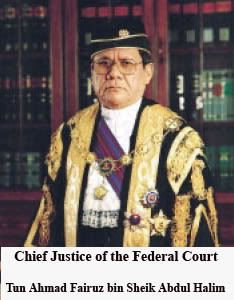
and the following 8 judges
1. Dato' Abdul Hamid bin Haji Mohamad
2. Dato' Alauddin bin Dato' Mohd. Sheriff
3. Dato' Arifin bin Zakaria
4. Dato' Bentara Istana Dato' Nik Hashim bin Nik Ab. Rahman
5. Dato' Augustine Paul a/l Sinnappen
6. Dato' Abdul Aziz bin Mohamad
7. Dato' Haji Hashim bin Dato' Haji Yusoff
8.Dato' Azmel bin Haji Maamor
Monday, 2 April 2007
The Really PATHETIC Malaysians: Too Busy to Register to Vote !!
More than half ( 57 %) of voting-age Malaysians (between ages 21 -35 surveyed) did NOT register to vote. Reasons:

Quote:
Read here full article by Nisrin Othman in Malay Mail
TOO occupied with work.
That’s the excuse given by those aged between 21 and 35 for not registering as voters.
The Malay Mail conducted a telephone survey yesterday, calling 100 respondents at random to find out whether they had registered as voters following the Election Commission’s statement that 70 per cent of the 4.9 million Malaysians who have yet to register are in that age bracket.
Our findings showed that 57 per cent of those surveyed NOT registered, citing being too busy with their work, did not know where to register and not interested in the election as the excuses.
63 % (of the unregistered respondents) said they were busy and did not have time to register while 21 per cent of them felt that there was ample time to do so.
9 % did NOT know where to register and
7 % REFUSED to become voters.
7 % cited a lack of interest in politics and not knowing which political party to support as the reasons for their refusal to register as voters.
Most respondents said getting their work done was more important than getting themselves registered as voters.
Some are students who said their tight schedule was the reason why they did not register.
They admitted that despite reminders in the media to register, their thoughts were more focused on studies.
“Our future depends on the examinations and involvement in the university and NOT on who wins the election ,” said one respondent.
Yesterday, Election Commission deputy chairman Datuk Wan Ahmad Wan Omar said some 70 per cent of the 4.9 million Malaysians yet to register as voters are aged between 21 and 35 years,
He said the tight schedules of students at institutions of higher learning and priority on career advancement were cited as the contributing factors.
“We understand that they have priorities but registering as a voter does not take long,” he told reporters after launching a nationwide voter registration exercise for Sikhs by the Malaysian National Sikh Movement (Geraksikh)in Kuala Lumpur.
Wan Ahmad said that as of December last year, some 15.2 million Malaysians had attained the age of 21 but only 10.3 million had registered as voters.
NON-VOTERS BY STATE
He said it would take about three months for the verification process to be completed at each voter registration exercise and that only then would the voter be eligible to vote.
COMMENTARY
From Letter to Editor (Malaysiakini) : Read here for more
Excerpts:
"I refer to the letter, Gov't not showing empathy with common man, .....that the government should be more attuned to the public or voters lest they 'abandon ship'.
.... The Barisan Nasional government has turned into a regime, a regime that is UNACCOUNTABLE to the people.
How would you explain a government that does not give scant regard to the public whose main lament is simply that the rising cost of living and the effects of the one-sided agreements with the monopolistic toll concessionaires are unfair to them.
The very nature of a regime is that it does not answer to the public. As it is, the check and balance system of a democratic society is NOT applicable here.
The Election Commission is NOT an independent commission, voting fraud is common.
Whistle-blowers and protesters are beaten and detained WITHOUT trial just to stifle opposition and to allow the ruling party a free rein to abuse their power for personal gain.
Let this humble writer, who is nothing more than an ordinary Malaysian,.. paraphrase Abraham Lincoln, the government should be of the people, for the people and by the people.
Sadly, this is NOT the case in Malaysia. Not even close..."
-Jakers Lambert
- TOO BUSY with their work;
- Did NOT know where to register and
- NOT interested in the election.
Quote:
"People deserve the government they get."
- Tun Dr. Mahathir
Read here full article by Nisrin Othman in Malay Mail
TOO occupied with work.
That’s the excuse given by those aged between 21 and 35 for not registering as voters.
The Malay Mail conducted a telephone survey yesterday, calling 100 respondents at random to find out whether they had registered as voters following the Election Commission’s statement that 70 per cent of the 4.9 million Malaysians who have yet to register are in that age bracket.
Our findings showed that 57 per cent of those surveyed NOT registered, citing being too busy with their work, did not know where to register and not interested in the election as the excuses.
Most respondents said getting their work done was more important than getting themselves registered as voters.
Some are students who said their tight schedule was the reason why they did not register.
They admitted that despite reminders in the media to register, their thoughts were more focused on studies.
“Our future depends on the examinations and involvement in the university and NOT on who wins the election ,” said one respondent.
Yesterday, Election Commission deputy chairman Datuk Wan Ahmad Wan Omar said some 70 per cent of the 4.9 million Malaysians yet to register as voters are aged between 21 and 35 years,
He said the tight schedules of students at institutions of higher learning and priority on career advancement were cited as the contributing factors.
“We understand that they have priorities but registering as a voter does not take long,” he told reporters after launching a nationwide voter registration exercise for Sikhs by the Malaysian National Sikh Movement (Geraksikh)in Kuala Lumpur.
Wan Ahmad said that as of December last year, some 15.2 million Malaysians had attained the age of 21 but only 10.3 million had registered as voters.
NON-VOTERS BY STATE
- Selangor topped the list with the most number of UNREGISTERED voters at 600,000,
- Sarawak (450,000),
- Johor Baru (400,000),
- Perak (375,000) and
- Kuala Lumpur (300,000)
He said it would take about three months for the verification process to be completed at each voter registration exercise and that only then would the voter be eligible to vote.
COMMENTARY
From Letter to Editor (Malaysiakini) : Read here for more
Excerpts:
"I refer to the letter, Gov't not showing empathy with common man, .....that the government should be more attuned to the public or voters lest they 'abandon ship'.
.... The Barisan Nasional government has turned into a regime, a regime that is UNACCOUNTABLE to the people.
How would you explain a government that does not give scant regard to the public whose main lament is simply that the rising cost of living and the effects of the one-sided agreements with the monopolistic toll concessionaires are unfair to them.
The very nature of a regime is that it does not answer to the public. As it is, the check and balance system of a democratic society is NOT applicable here.
The Election Commission is NOT an independent commission, voting fraud is common.
Whistle-blowers and protesters are beaten and detained WITHOUT trial just to stifle opposition and to allow the ruling party a free rein to abuse their power for personal gain.
Let this humble writer, who is nothing more than an ordinary Malaysian,.. paraphrase Abraham Lincoln, the government should be of the people, for the people and by the people.
Sadly, this is NOT the case in Malaysia. Not even close..."
-Jakers Lambert
Subscribe to:
Posts (Atom)